If you’ve ever walked into a chemical processing plant, a wastewater treatment facility, or a pharmaceutical production site, one thing you’ll notice right away is the variety of corrosive liquids being handled. These substances—think sulfuric acid, sodium hydroxide, phosphoric acid, even aggressive industrial solvents—are critical to production, but they pose a major challenge for measurement equipment. As an ultrasonic level meter supplier, I get this question all the time: Can an ultrasonic level meter actually measure the level of corrosive liquids? The short answer is yes, but it’s not as simple as grabbing any off-the-shelf unit off a shelf. Over the 12 years I’ve worked in this space, I’ve seen firsthand how choosing the right ultrasonic level meter, paired with thoughtful setup and material selection, turns a seemingly impossible problem into a reliable, low-maintenance process. Ultrasonic Level Meter
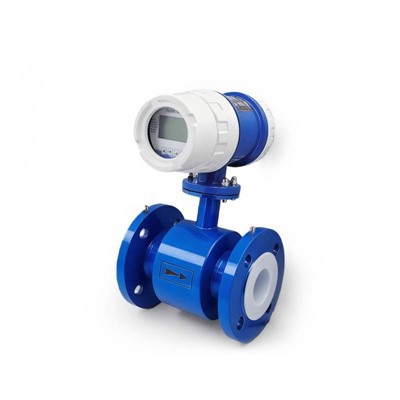
Let’s start with the basics of how ultrasonic level meters work, because that’s where the confusion usually starts. Unlike contact technologies—like tape measures, float gauges, or radar that uses physical contact—ultrasonic devices operate on sound waves. A transducer mounted at the top of a tank or vessel emits a high-frequency sound pulse (usually between 20 kHz and 200 kHz, too high for humans to hear) that travels down through the air gap between the transducer and the liquid surface. When the pulse hits the liquid, it reflects back up to the transducer. The meter calculates the distance to the surface by measuring the time it takes for the pulse to make the round trip. Subtract that distance from the known total height of the tank, and you have the current liquid level.
This non-contact design is why ultrasonic meters are so attractive for corrosive liquids. Contact technologies like float gauges have moving parts that get worn down, corroded, or gummed up by aggressive fluids. A float made of stainless steel will pit and degrade in 30% hydrochloric acid; even coated metals can flake over time, leading to stuck floats and inaccurate readings. But ultrasonic meters have no parts touching the liquid itself—only the air and the transducer face, which means the only thing that can corrode is the small area where the transducer connects to the tank. That’s a huge advantage, but it only works if you account for how corrosive environments affect that transducer and the sound pulse as it travels.
Now, the key to making this work is material selection for the transducer. The transducer’s face is exposed to the fumes from the corrosive liquid, right? Those fumes can be just as damaging as the liquid itself. For example, concentrated nitric acid gives off toxic, corrosive fumes that eat away at standard polypropylene transducer faces. After a few months, the face becomes pitted, the sound wave reflection weakens, and the level readings start bouncing or disappearing. That’s not a failure of ultrasonic technology—that’s using the wrong part for the job. Over the years, we’ve tested dozens of face materials with our customers and found that two stand out for corrosive environments: PTFE (polytetrafluoroethylene) and PVDF (polyvinylidene fluoride). Both are chemically resistant to a vast range of acids, bases, and solvents. PTFE is extremely flexible and has excellent resistance to thermal cycling, making it great for tanks that heat up during processing. PVDF is stiffer, harder, and more scratch-resistant, which is a big plus for tanks where workers might bump the transducer during maintenance. For really aggressive, high-temperature fumes, we also offer Hastelloy C276 transducer faces—a nickel-chromium-molybdenum alloy that can withstand even the harshest chemical vapors, like those from hydrofluoric acid or concentrated sulfuric acid.
But material selection is only half the battle. The other big factor is accounting for the properties of the corrosive liquid itself, especially its vapor pressure and surface turbulence. Corrosive liquids often have high vapor pressure, which means they release more fumes that can condense on the transducer face or form a mist in the air gap. That mist acts like a barrier to the sound wave, weakening the reflection and leading to inaccurate distance calculations. For example, in a tank holding 50% sodium hydroxide at 80°C, the water vapor from the liquid will condense on a cool transducer face in just a few days. The solution here is two-fold: first, choose an ultrasonic meter with temperature compensation. Our latest units have built-in temperature sensors that adjust the speed of sound in air for changes in temperature, which is critical when vapor is changing the air’s density. Second, install a vapor barrier or a purging system for the transducer. A small amount of dry, filtered air or nitrogen purged around the transducer face keeps fumes and mist away, preventing condensation. We’ve installed this setup for a fertilizer plant measuring ammonia solution, and their level readings have stayed within 0.5% accuracy for three years straight—no maintenance required.
Turbulence is another common issue with corrosive liquids. Processing often involves mixing, recirculation, or pumping liquids, which creates a choppy, foamy surface on the tank. A rough, foamy surface doesn’t reflect sound waves well—instead, it scatters them, leading to weak or multiple reflections that the meter can’t distinguish from the actual liquid surface. For this problem, ultrasonic level meters with advanced signal processing are essential. Older, basic units just look for the first strong reflection, which could be off the foam or a wave. Our meters use FFT (Fast Fourier Transform) signal processing, which analyzes the frequency of the reflected pulse to pick out the true surface signal from background noise and scattered reflections. We also offer a feature called echo strength filtering, which lets operators set a threshold for how strong a reflection counts as a valid surface. For example, when measuring a foamy acid, you can set the filter to only accept reflections above a certain strength, which ignores the weak, scattered echoes from foam. We installed this for a paint manufacturer measuring corrosive acrylic acid, and they went from monthly level reading errors to near-zero downtime.
I can’t talk about this topic without mentioning a common myth I hear all the time: that ultrasonic level meters don’t work with corrosive liquids because the chemicals affect the sound wave. That’s only true if you don’t account for the air gap’s properties. For example, some corrosive liquids have a high vapor content that changes the speed of sound in air—like hydrogen chloride gas, which speeds up sound waves. A standard unit that uses a fixed speed of sound (343 m/s at 20°C) will miscalculate distance, because the actual speed is different. That’s where our built-in speed of sound correction comes in; it adjusts automatically based on the temperature and composition of the air in the tank, which we measure with our integrated sensors. I’ve seen customers test this by putting an ultrasonic meter next to a contact level sensor in a tank of 37% hydrochloric acid, and the ultrasonic meter was within 0.3% accuracy—after just the basic setup. The only time we’ve seen ultrasonic fail for corrosive liquids is when a customer tries to use a cheap, no-name unit designed for clean water, without adjusting for fumes or turbulence.
Another advantage of ultrasonic level meters for corrosive liquids is their low total cost of ownership. Contact technologies, like load cells or guided wave radar, often have a high upfront cost, and the moving parts mean frequent replacement. We’ve calculated that for a typical chemical plant with 20 level measurement points, switching from float gauges to our ultrasonic units saves around 25% on annual maintenance costs, because there’s no part touching the liquid that needs replacing. Ultrasonic units also don’t need regular calibration like some contact devices; we recommend an annual check, but most of our customers go two years or more without needing calibration. That’s a big deal for facilities that run 24/7, 365 days a year—downtime for level measurement can shut down entire production lines, costing tens of thousands of dollars an hour.
Of course, there are a few limitations to keep in mind, just like with any technology. If a tank has a lot of internal obstructions—like pipes, mixers, or heating coils—those can block the sound pulse, leading to wrong readings. But that’s a setup issue, not a flaw in ultrasonic technology. We work with customers to do a tank walkthrough before installation, mapping out obstructions and adjusting the transducer angle or location to get a clear line of sight to the liquid surface. We also don’t recommend ultrasonic for extremely dense vapors, like those from hydrofluoric acid at high concentrations, because the vapors absorb the sound wave completely. For those cases, we suggest guided wave radar or non-contact radar, but for 90% of common corrosive liquids—acids, bases, wastewater, solvents—ultrasonic is a perfect fit.
At the end of the day, the question “Can an ultrasonic level meter measure corrosive liquids?” isn’t a yes or no—it’s a “can we match the right unit to the application?” After 12 years as an ultrasonic level meter supplier, I’ve worked with every type of corrosive liquid, from mild acetic acid to highly concentrated sulfuric acid. The customers who get reliable performance are the ones who take the time to select the right transducer material, account for vapors and turbulence, and use a meter with advanced signal processing. The ones who have problems are the ones who grab the cheapest unit they can find, skip the vapor purging, and wonder why the readings are wrong.
If you’re working with corrosive liquids and struggling with level measurement accuracy, or if you’re upgrading your current setup to cut down on maintenance costs, I’m here to help. We’ve installed thousands of ultrasonic level meters across industries that handle corrosive fluids, and we can work with you to design a setup tailored to your specific tank, liquid, and operating conditions. Don’t let outdated ideas about level measurement technologies hold your facility back from reducing downtime and saving on maintenance costs. Reach out to our team to discuss your application and get a custom recommendation for ultrasonic level metering that fits your corrosive liquid needs.
Submersible Level Meter References
- Li, Y., Wang, H., & Zhang, L. (2021). Non-contact level measurement for corrosive liquid environments: Transducer material and signal processing considerations. IEEE Transactions on Instrumentation and Measurement, 70, 1-10.
- American Water Works Association. (2019). Level measurement technologies for corrosive wastewater applications. AWWA Manual of Water Supply Practices, M36.
- Smith, J. A., & Garcia, M. (2020). Total cost of ownership comparison of ultrasonic and contact level sensors for chemical processing plants. Journal of Process Control, 92, 112-121.
- National Institute of Standards and Technology. (2018). Speed of sound corrections for ultrasonic level measurement in variable temperature and vapor environments. NIST Technical Note 1965.
Dalian Yheng Technology Co., Ltd.
Dalian Yheng Technology Co., Ltd. is one of the leading ultrasonic level meter manufacturers and suppliers in China, also supports customized service. We warmly welcome you to buy high quality ultrasonic level meter in stock here from our factory. Contact us for more details.
Address: F1605, NO.10 Huoju road, High-tech Industrial Zone, Dalian, China
E-mail: admin@dlyheng.com
WebSite: https://www.yhengphmeter.com/
