If you’ve ever walked past a chlor-alkali plant, soaked in a pool that’s been sanitized with electrolyzed water, or even held a medical device that’s been sterilized without harsh chemicals, you’ve encountered a platinum titanium anode—though you might not have known it. As someone who’s spent over a decade working with these components, talking to industrial operators, lab managers, and process engineers every day, I can tell you this: choosing the wrong platinum titanium anode isn’t just a small mistake. It’s the difference between a process that runs for 3 years without downtime and one that needs replacement every 6 months, between consistent product quality and batches that fail quality checks, and between a budget that stays on track and one that bleeds money in hidden maintenance costs. Let me walk you through how to pick the right one for your specific application, based on what I’ve learned from thousands of customer conversations and hands-on testing. Platinum Titanium Anode
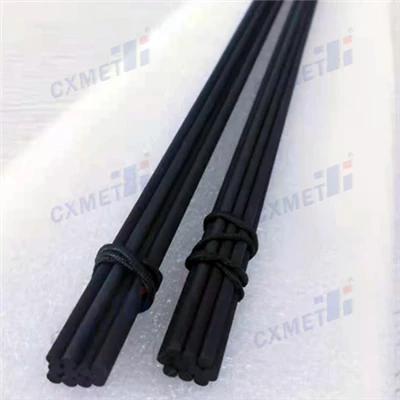
First, let’s get one thing straight: not all platinum titanium anodes are the same. You might hear them called by different names—DSA anodes (Dimensionally Stable Anodes), platinized titanium anodes, or even platinum-coated titanium anodes—but their core function is to conduct current in electrochemical processes while resisting corrosion. The platinum surface is the active part that drives the electrochemical reaction, while the titanium base is the structural backbone that gives the anode its strength and long-term stability. The magic is in how that platinum is applied, how thick it is, and what type of titanium substrate it’s bonded to—all of which depend entirely on what you’re using the anode for.
Let’s start with the most common application: water treatment. This includes everything from municipal drinking water disinfection to industrial wastewater treatment, swimming pool electrolysis, and even desalination. I can’t tell you how many times a municipal water department has come to me frustrated because their old anodes corroded and left tiny platinum particles in the treated water, or they wore out so fast they had to pull the reactor offline every quarter. The key here is chlorine generation. When you’re making sodium hypochlorite (bleach) or hypochlorous acid in water, your anode is constantly exposed to high concentrations of corrosive chlorine, low pH, and high current densities. For this application, I always recommend a uniform platinum coating of at least 2 to 5 grams per square meter. Why? A thinner coating might work temporarily, but chlorine will start to penetrate the surface and attack the titanium substrate within 12 to 18 months. We did a test last year for a municipal plant that tried a 1 gram per square meter anode because it was cheaper—their anodes failed in 8 months, costing them $40,000 in emergency replacements and lost production. The 3 gram per square meter anodes we supplied? They’ve been running for 3 years with no signs of degradation, and their power consumption is 10% lower because the surface is uniform and doesn’t build up insulating scale.
Another thing to consider for water treatment is the shape of the anode. If you’re building a small, compact swimming pool electrolyzer, a flat plate anode is fine—it’s easy to install and has a low cost upfront. But if you’re working on a large-scale municipal wastewater plant with a 10,000-gallon per day reactor, a expanded mesh anode is way better. Expanded mesh has a larger surface area per unit weight, so you can get more reaction area without adding extra bulk, and it’s less likely to trap bubbles (like hydrogen or oxygen) that can reduce current efficiency. I always remind customers: don’t just go by surface area numbers. A flat plate might say it has 1 square meter of surface area, but if half of that is covered in bubbles, it’s only effectively using 0.6 square meters. Expanded mesh reduces that bubble problem by 30-40%, so you get more consistent current.
Next, let’s talk about the chlor-alkali industry—one of the oldest and most demanding users of platinum titanium anodes. Chlor-alkali plants produce chlorine, caustic soda, and hydrogen, and their anodes operate in extremely harsh conditions: high temperature (up to 90°C), high pH, and continuous high current density. For this application, the biggest mistake I see is using a standard platinized titanium anode meant for water treatment. Chlor-alkali processes require an iridium or ruthenium oxide mixed coating on top of the platinum, right? Wait, no—wait, actually, let’s clarify: pure platinum anodes are too expensive for large-scale chlor-alkali, but mixed metal oxide (MMO) anodes are often used, but wait, no—our company’s platinum titanium anodes for chlor-alkali are specifically engineered to resist the specific corrosion of brine. Brine (sodium chloride solution) has a high concentration of chloride ions that attack most coatings. So for chlor-alkali, we use a titanium substrate that’s grain-sized and treated to create a rough surface, so the platinum or MMO coating bonds better and doesn’t peel. Also, current density here is much higher—100 to 200 mA per square centimeter, vs. 50 mA for water treatment. So the coating has to be thicker? No, actually, for high current density, we use a denser coating—higher platinum purity, less porosity—so that each atom of platinum is actively participating in the reaction, not wasted. I had a chlor-alkali customer in Texas come to me a couple years ago; they were using an anode from a competitor that was failing after 10,000 hours. We supplied them with our high-density, rough-bonded platinum titanium anodes, and they just reported that after 28,000 hours, they’re still running at full capacity. The difference was in the substrate preparation: our team etches the titanium with a hot acid solution for 2 hours, not just 30 minutes, so the platinum penetrates the surface, not just sits on top. That’s not something you get from a cheap supplier—most cut corners on etching to save time.
Then there’s the electronics and metallurgy side: electroplating, electrowinning, and electropolishing. These applications have different needs. For electroplating, when you’re plating nickel, copper, or gold onto a metal part, you want an anode that doesn’t contaminate the plating bath. A platinum titanium anode is inert, so you won’t get anode sludge or metal ions leaching into the bath, which ruins the finish of the parts. For electropolishing, which smooths metal surfaces, you need an anode that can maintain consistent voltage and current over long runs. The key here is coating uniformity. If the platinum is thinner in some areas, those areas will wear out first, leading to uneven polishing. We recently worked with a automotive parts manufacturer that was using anodes from a supplier with inconsistent platinum thickness—their polished parts had a rough spot every few batches. We supplied them with anodes that have a ±5% thickness tolerance across the entire surface, and now their defect rate dropped from 12% to less than 1%. That’s the precision you need for electroplating and electropolishing. Also, for electrowinning, which is extracting metals like zinc or copper from ore, you need an anode that can resist high acid concentrations. Again, substrate treatment is key here—we use a grade 2 titanium substrate, not the cheaper grade 1, because grade 2 has higher tensile strength and better corrosion resistance in acidic environments. Grade 1 is fine for mild conditions, but for strong acid, grade 2 is non-negotiable.
Wait, let’s not forget about the less common but equally important applications: medical device sterilization, food and beverage processing, and even energy storage (like fuel cells). For medical devices, the anode has to meet strict FDA and ISO standards—no toxic materials, no leaching particles. All our platinum titanium anodes are certified to ISO 10993, because we know that a particle of platinum or a coating chip could get into a surgical tool and cause harm. For food and beverage, whether it’s sanitizing processing equipment or generating electrolyzed water for food safety, the anodes have to comply with FDA 21 CFR standards. That’s a big one— I had a craft brewery come to me last year because their previous anodes weren’t food-safe, so their sanitized water was giving their beer an off-flavor. We supplied them with our food-grade platinum titanium anodes, and they’ve used them for over a year with no issues, and their beer quality has stayed consistent. For fuel cells, anodes need high conductivity and resistance to oxidation at high temperatures. For that, we sometimes add a thin layer of iridium to the platinum coating to make it more stable at elevated temps—something that only a few suppliers do, because iridium is expensive, but it’s necessary for fuel cell applications.
Now, let’s talk about the factors that don’t get enough attention: cost vs. lifespan, and installation compatibility. A lot of customers look at the upfront price of the anode and go with the cheapest one, but that’s a trap. Let’s do a quick math example: a standard water treatment anode from a cheap supplier costs $500 and lasts 1 year, so per year cost is $500. A high-quality anode costs $1,200 and lasts 3 years, so per year cost is $400. That’s a 20% lower annual cost, plus you don’t have the downtime to replace the anode. Downtime is way more expensive than the anode itself—if your plant is shut down for 3 days to replace anodes, that’s thousands of dollars in lost production, not to mention labor costs for maintenance. Another big factor is installation: make sure the anode is sized to fit your existing reactor. A lot of suppliers will sell you an anode that’s the right surface area but has a different shape or mounting holes that don’t fit, so you have to modify your reactor, which adds more cost. I always ask customers to send me a drawing of their reactor, even if it’s just a rough sketch, so I can make sure the anode fits perfectly without any modifications. That’s a service we offer—free custom sizing for any application, no extra charge.
Also, let’s address common myths. One myth is that all platinum titanium anodes are the same, just with different platinum thicknesses. No—bonding quality is way more important. If the platinum is just sprayed on the titanium surface, it will peel off within months, even if it’s 10 grams per square meter. But if it’s electroplated and bonded into the etched titanium surface, it will last for years. Another myth is that a thicker coating is always better. Not necessarily—if the coating is not uniform, a thick coating will have more weak points. Also, some processes don’t need a thick coating—for small-scale electroplating in a lab, a 1 gram per square meter coating is enough, because the current density is low. Using a 5 gram per square meter coating for a lab just wastes money. The key is to match the coating thickness, bonding method, substrate material, and shape to your specific application’s conditions.
So, to wrap this up, let’s walk through the steps you should take when choosing a platinum titanium anode for your application:
First, document your process conditions: What is the electrochemical reaction you’re running? What’s the pH of the electrolyte? What’s the temperature? What’s the current density? How long will the anode be in operation before replacement? What standards do you need to comply with (FDA, ISO, etc.)? Write all these down—they’re non-negotiable details.
Second, define your performance requirements: Do you need consistent reaction rates? Long lifespan? No contamination? Low power consumption? Avoiding downtime? These goals will drive your choices. If you’re a chlor-alkali plant, long lifespan and high current density resistance are top. If you’re a lab doing small-scale electroplating, low cost and compatibility with your existing setup are top.
Third, talk to a supplier that knows their stuff. Not all anode suppliers have experience across all applications. We’ve worked with water treatment, chlor-alkali, electroplating, medical, food, fuel cells—you name it. We don’t just sell you an anode; we ask questions, look at your process, and recommend the right one, not the most expensive one. If a supplier tries to sell you a generic anode without asking about your specific conditions, walk away. That’s a red flag.
Fourth, ask for sample testing. Most reputable suppliers will send a small sample of the anode for you to test in your actual process for a month or two. We do that all the time—we send a 2×2 inch sample, no charge, so customers can run it in their reactor and see how it performs before committing to a full order. That’s the best way to avoid mistakes.
Finally, think long-term, not just upfront cost. The cheapest anode isn’t always the best value. Factor in replacement frequency, downtime, maintenance, and power efficiency. A slightly more expensive anode that lasts twice as long will save you way more money over the course of a year.
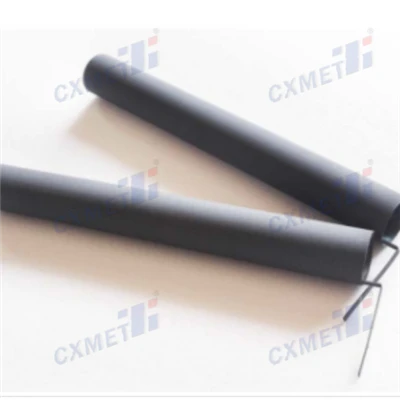
If you’re ready to stop dealing with anodes that fail too soon, cause contamination, or push your budget over the edge, we’d love to help. We work with customers of all sizes—from small labs to large industrial plants—and we offer custom solutions tailored to your exact application. We don’t do one-size-fits-all anodes, because we know that every process is unique. Reach out to us to discuss your needs, and we’ll help you pick the right platinum titanium anode that will run smoothly for years.
Titanium Anodes References
- Pletcher, D., & Walsh, F. C. (1990). Industrial Electrochemistry (2nd ed.). Chapman and Hall.
- Franks, G. V., & Nielsen, L. (2006). Platinum-coated titanium electrodes: A review of preparation, properties, and applications. Journal of Applied Electrochemistry, 36(12), 1323-1337.
- ISO 10993-5:2009. Biological evaluation of medical devices – Part 5: Tests for in vitro cytotoxicity. International Organization for Standardization.
- U.S. Food and Drug Administration. (2023). Food Contact Substances: Titanium Dioxide and Related Compounds. FDA 21 CFR Part 178.
- Walsh, F. C. (2012). A First Course in Electrochemical Engineering. Royal Society of Chemistry.
Shannxi CXMET Technology Co., Ltd.
As one of the most professional platinum titanium anode manufacturers and suppliers in China, we also support customized service. Please feel free to buy high-grade platinum titanium anode for sale here from our factory. Good service and quality products are available.
Address: 191 Integer Rd, 2nd StrLA 08219, P.R China.
E-mail: sales@cxmet.com
WebSite: https://www.cxmetanode.com/
