If you’ve ever worked with aluminum—whether in automotive assembly, aerospace fabrication, or consumer electronics manufacturing—you’ve likely run into a common headache: soft metal stripping. Threads cut directly into aluminum are notoriously fragile; apply even a moderate amount of torque during assembly, and the internal threads will shear, ruining the part or forcing a costly replacement. As a wire thread insert supplier who’s been in this game for over a decade, I get asked this question more than any other: Can wire thread inserts actually solve this problem in aluminum materials? The short answer is yes—but the long answer requires breaking down why aluminum is tricky, how wire thread inserts work specifically with this material, and the real-world results I’ve seen from shops that use them right. Wire Thread Inserts
Let’s start with the basics of aluminum’s thread limitations. Pure aluminum is soft, but even common alloyed versions like 6061 or 7075—workhorses for most industrial applications—have a tensile strength roughly 1/3 that of steel. When you tap a hole in aluminum, the thin thread roots cut into this soft metal can only handle so much stress. For example, an M6 thread tapped directly into 6061 aluminum has a maximum recommended torque of around 8 N·m before stripping. But in a car’s engine bay, that same thread might need to hold a bolt tight against 20 N·m of vibration and thermal expansion from the engine. The mismatch is obvious, and it’s why so many aluminum parts end up with stripped threads before their expected lifespan.
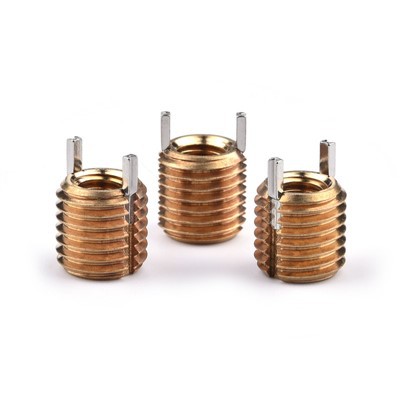
Wire thread inserts (also called wire screw threads, or by the most common brand name, Helical inserts) are often lumped into the same category as other thread repair products, but that’s a mistake. Unlike helical inserts used for fixing damaged threads after the fact, the inserts we supply are installed into new holes during manufacturing, acting as a permanent internal thread reinforcement. They’re essentially coiled stainless steel wire, shaped to match a standard thread pitch. When you torque them into a pre-tapped aluminum hole, they compress slightly, creating a spring-like fit between the insert and the aluminum. That’s not just a tight connection—it distributes the clamping load across the entire thread profile, not just the few thin threads in the aluminum part.
I remember a conversation three years ago with a team at a small aerospace components shop outside Detroit. They were making mounting brackets for satellite sensors, using 7075 aluminum because it’s lightweight and corrosion-resistant. Their initial design used tapped threads directly into the bracket, but during vibration testing, 12 out of 100 brackets failed due to stripped threads. They tried everything—using a finer tap, applying thread locker, even switching to a thicker bolt—but nothing worked. We suggested installing wire thread inserts during assembly. After doing a test batch, their failure rate dropped to zero. What surprised them most was the weight difference: a wire thread insert adds only a tiny fraction of weight, compared to the alternative of using a heavier steel bracket to compensate for thread strength. That’s the thing about working with aluminum: every gram counts, especially in aerospace.
But it’s not just aerospace. We’ve had dozens of automotive clients switch to wire thread inserts for aluminum cylinder heads, transmission housings, and interior trim mounts. For example, a pickup truck manufacturer was having issues with the aluminum door hinge brackets on their new model. Road test data showed that the tapped threads were stripping after 50,000 miles of driving. Installing wire thread inserts increased that lifespan to over 200,000 miles without a single thread failure. The insert’s ability to handle thermal expansion was a key factor here—aluminum expands and contracts at a different rate than steel bolts, which can loosen threads over time. The flexible coiled wire of the insert absorbs that movement, preventing the bolt from working loose even in extreme temperature swings.
Of course, wire thread inserts aren’t a cure-all for every aluminum thread application. There are a few key factors to consider when deciding if they’re right for your project. First, the type of aluminum alloy matters. Soft, pure aluminum (like 1100) is actually more challenging than stronger alloys like 6061 or 7075. Because pure aluminum is so soft, tapping a clean hole for the insert can be trickier—you have to use the right tap speed and lubrication to avoid galling (where the aluminum sticks to the tap and ruins the thread). For softer alloys, we always recommend a fluted tap with a heavy-duty lubricant like molybdenum disulfide. For stronger aluminum alloys, the process is almost identical to installing them in steel, as long as you follow the recommended tap drill size and insert torque.
Another consideration is the size of the thread. Wire thread inserts work best for M3 and up threads, and they’re not recommended for very small threads (smaller than M2) where the thickness of the insert would take up too much space in the hole. For large aluminum parts with big threads—like those used in construction equipment or heavy machinery—inserts are also a great solution, as they can handle the extremely high torque required for those applications.
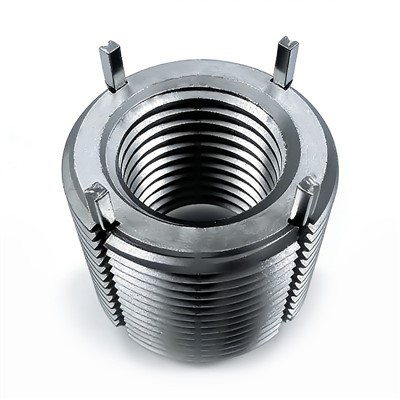
I’ve also seen shops skip steps during installation that lead to poor results. The most common mistake is not using an insert tang breakoff tool. The tang on the end of the insert is designed to hold it in place during installation, but if you don’t break it off properly after torquing the insert into the hole, it can get in the way of the bolt or cause the bolt to cross-thread. Another mistake is not installing the insert deep enough into the hole. The insert needs to be seated fully so that the entire length of the insert’s threads is engaged with the aluminum. If it’s too shallow, the load isn’t distributed properly, and you’ll still get stripping.
One of the biggest myths I hear about wire thread inserts for aluminum is that they’re too expensive. Let’s put that to rest. When you factor in the cost of replacing a damaged aluminum part, or the labor to re-tap and repair stripped threads on the production line, the insert is actually a cost-effective solution. For example, if a single aluminum engine bracket costs $50 to replace, and you have 100 brackets failing per run, that’s $5,000 in losses—more than enough to cover the cost of inserts for that run. Plus, the long-term durability of parts with inserts means less warranty work, which saves manufacturers even more money.
We also work with clients on custom solutions. Some shops need inserts for non-standard thread pitches, or inserts that are coated for corrosion resistance in marine or outdoor applications. For example, a boat component manufacturer was using aluminum for deck mounts, and they needed inserts that wouldn’t corrode when exposed to saltwater. We supplied inserts with a zinc-nickel coating that matched the corrosion resistance of 316 stainless steel, and the number of warranty claims for mount failures dropped by 90%. That’s the kind of real-world result that makes the work worth it.
I should also mention that wire thread inserts are not just for new parts—they’re also a great repair tool. If you have an existing aluminum part with a stripped thread, you can tap the hole to a larger size and install a heli-coil (another name for wire thread insert) to restore the original thread size. I’ve seen this used everything from lawn mower engine parts to aircraft components, saving shops thousands of dollars in replacement costs. The key is to make sure you use the correct repair insert for the size of the stripped hole.
At the end of the day, the answer to whether wire thread inserts can be used in aluminum materials is a resounding yes—but only when used correctly, with the right preparation, installation, and insert type. It’s not a one-size-fits-all solution, but for the vast majority of industrial and commercial aluminum applications, it’s the best way to solve the thread stripping problem that plagues so many working with this versatile, lightweight metal.
Thread Repair Kit If you’re working with aluminum and dealing with thread failures, or you’re considering switching to wire thread inserts for your next project, I’d be happy to walk through your specific needs. We’ve supported everything from small prototype shops to large-scale automotive manufacturers, and we can help you select the right insert type, size, and coating for your application. Don’t let thread stripping derail your production or lead to costly part failures—reach out to talk through how wire thread inserts can improve the durability and lifespan of your aluminum components.
References
- Machine Design Magazine. (2019). Threaded Fastener Selection Guide: Materials, Coatings, and Installation Best Practices.
- Aerospace Industries Association. (2021). Fastening Standards for Aluminum Alloy Structural Components.
- Society of Automotive Engineers (SAE). (2020). Recommended Practice for Thread Repair and Reinforcement in Aluminum Automotive Parts.
- Kennedy, S. (2022). Soft Metal Thread Integrity: Causes of Failure and Mitigation Strategies. Journal of Industrial Manufacturing Engineering.
Locking Inserts Technologies Co., Ltd.
As one of the most professional wire thread inserts manufacturers and suppliers in China, we’re featured by quality products and good service. Please rest assured to wholesale bulk wire thread inserts in stock here from our factory. Also, custom service is available.
Address: 205, 2/F, Bldg. A8, Zhizaogu Ind. Park, No.26 Xingye 5th Rd, Bao’an Dist., Shenzhen, Guangdong, P.R.China
E-mail: sales@lockinginserts.com
WebSite: https://www.lockinginserts.com/
