If you’ve ever wandered through a furniture store, a rental space, or even a friend’s living room and thought, “That couch looks brand new—wait, it was scratched just last month,” there’s a good chance you ran into furniture film. I’ve been in the furniture film game for 7 years now, so let me tell you, one of the first questions everyone hits me with is: “How much does this stuff even cost?” And it’s not a one-word answer, trust me. No, it’s not as simple as “$1 a roll” or “$50 a sheet”—there’s a whole bunch of stuff that bumps the price up or down, and I’m gonna break it down like I’d break it down to my cousin who’s trying to redo his rental on a budget. Furniture Film

First off, let’s get clear on what furniture film actually is, for anyone who’s still lost. It’s that thin, sticky (but not super sticky, don’t worry) film you put on couches, chairs, tables, even wood cabinets, to protect them from scratches, spills, pet claws, that random coffee mug you always knock over. It’s not the weird packing tape that leaves a residue (though I get why some people confuse the two). It’s designed to be clear, mostly, so you can’t even tell it’s there once it’s on. Makes sense, right? You don’t want your vintage dining table covered in something that looks like plastic wrap.
Now, let’s talk pricing basics. Most of my clients are either DIYers fixing up their own spaces, small business owners—like rental property managers, moving companies, or furniture repair shops—or even big brands that sell couches and want to add an extra layer of protection. For DIY folks, you’re usually buying small rolls or sheets, and that’s where the numbers are easiest to grasp. A basic, no-frills 12-inch-wide roll (that’s perfect for couch arms or chair legs) runs anywhere from $10 to $25. Wait, why such a big gap? Oh right—thickness and quality. The cheap stuff you see at the hardware store for $10 a roll is only 2 mil thick. Mil is the unit we use here, and 2 mil is like the plastic on a cheap grocery bag. It’ll stop a light scratch from your cat digging, but if you drop a metal tool on it, it’ll tear. The good stuff, the stuff I supply? That’s 3.5 to 5 mil, which is thick enough to fend off pet claws, moving dollies, and spills (we’ve got a water-resistant coating too). That 5 mil roll is more like $20 to $25, and it’ll last longer, no residue when you peel it off.
Then there’s the stuff for bigger jobs, right? If you’re a rental property manager with 50 couches to prep, you’re not buying 10 tiny rolls. You’re buying bulk rolls, usually 24 or 36 inches wide, and that’s where per-square-foot pricing kicks in, which is way more efficient. For bulk orders, my per-square-foot price is between $0.20 and $0.80, depending on how much you order and what kind of film you need. Let me put that into real numbers: a standard couch back is about 8 square feet, so that’d be $1.60 to $6.40 to cover it. A dining table top, say 10 square feet, is $2 to $8. Yeah, that’s cheap, right? Way cheaper than reupholstering a couch or refinishing a table.
Wait, but hold on—there are extra costs that people never think about until they get the final invoice. Let’s go over those, because that’s where a lot of the confusion comes from. First, customization. Do you need a specific size cut? Like, if you have a weirdly shaped vintage chair and you don’t want to cut the film yourself, I can pre-cut it to fit exactly. That adds a little—usually 10 to 15% of the total order, but it saves you hours of measuring and fumbling with a roll, so it’s worth it for most people. Then there’s specialty film. Most people want clear, but some want matte, so it doesn’t get smudged by fingerprints on a coffee table, or anti-glare for TVs that are next to furniture, or even UV-protective film if you’re putting it on a piece that’s near a window, so the sun doesn’t fade the wood under the film. UV film runs a bit more, like an extra $0.10 to $0.15 per square foot, because it has an extra layer of protection.
Pet owners, I see you. You’ve got a cat that loves to scratch couch arms, or a dog that drags toys across the table, so you need something that’s claw-proof. Basic film can handle minor scratches, but claw-proof is a whole other level. That’s usually 6 to 8 mil thick, has a reinforced outer layer, and it’s way more resistant to tearing from sharp claws. Claw-proof film adds about $0.25 to $0.30 per square foot, which for a couch is like $2 extra total, but man, it makes a difference. I had a guy last year with two Great Danes, he tried basic film and it tore in a week, switched to claw-proof and still has it up 2 years later. No more yelling at his dogs, no more fixing scratches. Win-win.
Now, what about business clients, like furniture manufacturers? If you’re making 100 couches a month, you don’t want to buy rolls one by one, you want bulk, ongoing orders. I work with a few furniture brands that supply apartment complexes, and their pricing is even lower—like $0.15 per square foot, because we do monthly bulk shipments, no minimum order size. That’s why it pays to shop around for a supplier, not just a hardware store. The big box stores mark up their stuff way higher because they’ve got overhead to cover, but as a smaller supplier, I can pass those savings on to you, and I don’t sell you stuff you don’t need.
Wait, let’s bust some myths here, because I hear these all the time. First, “It’s super expensive, way cheaper to just not use it.” Let’s do quick math. A new couch costs $1,000 average. If you use furniture film, it’ll last twice as long, maybe three times, so you’re saving $500 to $700 over time. If you don’t use it and get a scratch, repair is $100 to $200, and if it’s bad, you’re buying a new couch sooner. That’s a no-brainer. Second, “It leaves residue when you peel it off.” The old cheap stuff does that, but all the film I supply is low-tack, meaning it sticks well enough to stay on, but not so well that it tears the paint or the fabric under it. I’ve had people peel it off couches they’ve had for 5 years, and the couch looks exactly like the day they put the film on. No sticky mess, no damage. That’s a big one for renters, because you don’t want to lose your security deposit.
Now, what factors actually change the cost, other than thickness and specialty? Order volume, obviously. The more you buy at once, the lower the per-unit price. If you need 50 square feet, that’s $0.60 per square foot. If you need 500 square feet, that drops to $0.30. That’s a huge difference, and it’s how bulk pricing works. Then, shipping. If you’re local, I can drop off orders for free, same-day sometimes. If you’re across the country, shipping is a flat rate of $15 for orders under 100 square feet, or free for orders over that. No hidden fees, I promise. A lot of other suppliers hit you with random shipping costs, but I keep it straightforward.
Wait, let’s talk about when people get the most confused. They come to me saying “I need film for my couch, give me a price,” and they don’t know how big the couch is, how thick they need, or if they want any specialty stuff. That’s why I always ask a few questions first, so I can give an accurate quote, not a guess. For example, if you have a standard 3-seat couch, that’s about 20 square feet total. Basic clear film, 3.5 mil, pre-cut to fit, that’s around $8. Add claw-proof, that’s $12. Add UV, that’s $14. That’s it. I’ve had people tell me they thought it’d be $50 for that, so you can see why questions matter.
Another thing: samples. I always send free samples to anyone who’s curious. You can get a 1-foot square piece of any kind of film I sell, so you can touch it, test it, see how clear it is, if it sticks how you want. No obligation, no charge. That’s saved me from a lot of bad reviews, because people know what they’re getting before they buy. A lot of suppliers charge for samples, but I don’t—this is a big investment for most people, so you should know what you’re paying for.
Now, let’s get real about hidden costs, because I hate when suppliers do this. Are there any? Let’s see—only if you order custom sizes that are way over what’s standard. Like, if you have a 10-foot long table, that’s a custom size, so I have to cut the film in a special way, which adds a little, but that’s way better than you trying to stretch a standard roll and wasting half of it. I never have a “surprise fee” for anything. If I give you a quote, that’s the total, no extra.
Wait, what about compared to other protection methods? Like, slipcovers? Let’s compare. A good slipcover for a couch is $80 to $150. It protects from scratches and spills, but it’s bulky, you have to take it off to wash it, and it changes the look of the couch. Furniture film is $10 to $20 for a couch, clear, so it looks like the original couch, no washing, no taking off unless you want to. That’s a no-brainer. It’s like comparing a temporary cover to a permanent (but easy to remove) protection layer.
Another common question: does it work on fabric? I know some people worry that it’ll make fabric feel weird. No, the film is thin, like a sticker almost, and it’s applied smooth, so you can still feel the fabric under it, no weird bump. And if you get a spill on it, you just wipe it off with a damp cloth, no stains seeping into the fabric. I had a lady last year spill red wine on her couch, she thought she ruined it, she had film on it, wiped it off, and the couch was totally fine. She sent me a thank you note, that’s the stuff that makes this job worth it.
So, to wrap this up—how much does furniture film cost? It ranges from $10 for a tiny DIY roll up to a few hundred dollars for a big commercial bulk order, depending on thickness, specialty features, volume, and customization. The worst thing you can do is buy the cheapest stuff at the hardware store, because it’ll tear in a week, and you’ll end up wasting money anyway. The good quality film I supply is an investment that’ll save you hundreds in repairs or replacements over time.
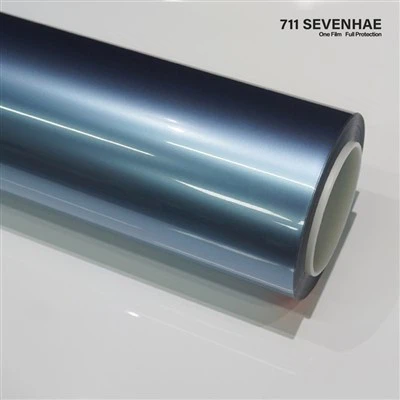
If you’re not sure what you need, shoot me a message, tell me what you’re protecting—couch, table, chairs, how big it is, if you have pets, or if it’s for a rental, and I’ll hook you up with a real, accurate quote, no fluff, no hidden fees. I’ve worked with hundreds of DIYers, property managers, small businesses, and big brands, so I know what works for different needs. Don’t guess, don’t overpay, just reach out and we can figure out the best option for you. Go ahead, take that first step—your furniture (and your wallet) will thank you.
Architectural Window Film References
- Furniture Industry Research Association. (2022). Residential Furniture Protection Trends and Cost Analysis.
- American Rental Association. (2023). Cost-Saving Solutions for Rental Property Furniture Maintenance.
- International Organization for Standardization. (2021). Standard Test Methods for Adhesive Film Durability for Furniture Applications.
Nanjing Qiyihe Environmental Protection Technology Co., Ltd.
As one of the leading furniture film manufacturers and suppliers in China, we offer a wide range of products with superior quality. We warmly welcome you to wholesale customized furniture film made in China here from our factory. If you have any enquiry about free sample, please feel free to email us.
Address: No. 36 Guangyue Road, Qixia District, Nanjing City, Jiangsu Province
E-mail: 711sevenhae@gmail.com
WebSite: https://www.711sevenhae.com/
