If you’ve ever worked in oil and gas exploration, you know that a thread engagement failure on a pipe string can shut down a well, delay a project, and cost tens of thousands of dollars in lost production. As a supplier of petroleum pipe thread tools, we get dozens of calls every week from rig managers, tool pushers, and maintenance technicians asking the same question: “What lubricant should I use with my pipe thread tools?” It’s not a trivial question—choose the wrong lubricant, and you’ll end up with galling, thread deformation, or even a pipe that seizes mid-run. Choose the right one, and you’ll extend tool life, ensure consistent torque application, and keep your operations on schedule. Today, we’re breaking down the science behind the best lubricants for petroleum pipe thread tools, and why not all lubricants are created equal for this specific application. Petroleum Pipe Thread Tools
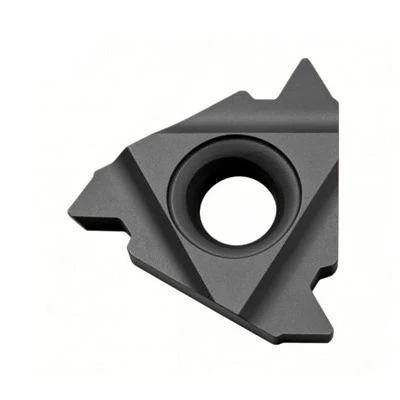
First, let’s set the context for why this matters. Petroleum pipe threads (both casing and tubing threads, like API Buttress or Round threads) rely on precise torque and shoulder make-up to create a pressure-tight seal. Unlike standard machine threads, these threads operate in extreme conditions: high temperatures, corrosive environments (saltwater, hydrogen sulfide, CO2), and heavy loads. When you tighten a pipe thread, the friction between the male and female threads generates heat. Without a proper lubricant, that heat can cause the thread’s material to transfer from one part to another—a process called galling. Galling doesn’t just ruin a single connection; it can also damage your thread tools, making them unusable prematurely. Our team sees this all the time: a customer uses a generic industrial grease, their thread dies pick up galling marks in a dozen spots, and they have to order a new set of tools two months earlier than expected. That’s a avoidable cost, and it all starts with choosing the right lubricant.
Let’s start with the most common mistake we see: using general-purpose lubricants. A lot of technicians grab a tube of automotive chassis grease or a generic anti-seize from their parts bin, thinking “grease is grease.” But those products aren’t formulated for the unique stresses of petroleum pipe threading. Automotive grease, for example, is designed for moderate pressure and temperature (think wheel bearings, not 50,000 psi pipe connections at 180°F). It breaks down quickly under the high contact pressure of pipe threads, leaving no protection as soon as you start making up the connection. Generic anti-seize, meanwhile, often contains metal particles (like copper) that can flake off during make-up. Those flakes get trapped between threads, causing uneven torque distribution and increasing the risk of thread failure. We’ve even seen cases where copper anti-seize reacted with steel pipe threads in sour service environments, accelerating corrosion. So, if you’re using these products, it’s time to make a change.
Now, let’s talk about the lubricants that work for petroleum pipe thread tools, and when to use each one. The first category is API-compliant thread lubricants specifically formulated for oilfield applications. API (American Petroleum Institute) Specification 5B outlines standards for pipe threads, and their recommended thread compounds are designed for exactly this purpose. These compounds are usually a blend of high-quality base oils, solid lubricants (like molybdenum disulfide or graphite), and corrosion inhibitors. What makes them different? They have the right viscosity to stay in place during make-up—even when you’re spinning pipe at high speeds on a rig. They also have high load-bearing capacity, which prevents metal-to-metal contact between threads. For most standard onshore operations, this is the go-to choice. We recommend API thread compounds for our customers working with carbon steel casing and tubing, where temperatures are moderate and there’s no extreme sour service.
Next, for operations in harsher environments, there’s high-performance synthetic thread lubricants. Synthetic lubricants (like polyalphaolefin or PAO-based compounds) have better thermal stability than oil-based lubricants. That means they won’t break down even when contact surfaces reach 300°F or higher, which is common in deep well operations or hot climate drilling. They also offer superior corrosion resistance, which is critical in offshore drilling or wells with high CO2 or saltwater exposure. A lot of our deepwater rig customers switched to synthetic lubricants after noticing that their thread tools were lasting 30% longer, even in salt spray environments. The key here is to look for a synthetic lubricant that’s compatible with the specific grade of steel your pipe tools are made of. For example, if your tools are made of chrome-moly steel, you’ll want a synthetic lubricant that doesn’t cause galvanic corrosion between the tool steel and the pipe’s steel.
Wait—what about solid lubricants like graphite or molybdenum disulfide (MoS2) compounds? These are a good option for specific applications, but only when used correctly. Graphite, for instance, is an excellent dry lubricant that doesn’t contain oils, so it’s ideal for jobs where you don’t want oil to contaminate the wellbore (like in some completion operations). But graphite can be messy, and if not applied evenly, it can leave gaps that lead to galling. MoS2, on the other hand, is a high-pressure lubricant that works well in very high load conditions. However, MoS2 can react with some pipe materials (like titanium alloys), so it’s important to check compatibility before use. We always advise customers to test a small amount of the lubricant on a scrap pipe section before using it on a critical connection—this prevents unexpected reactions.
Now, let’s address a question we get a lot: “Can I use thread seal tape with my lubricant?” The short answer is: only in specific cases, and never as a replacement for lubricant. Thread seal tape (like PTFE tape) is designed to create an additional seal between pipe threads, but it doesn’t provide the lubrication needed to prevent galling. In fact, using seal tape without a lubricant will almost certainly cause your thread tools to gall, because the tape adds extra friction. If you do use seal tape, apply it only to the last two or three threads (not the full thread length) and always pair it with a compatible thread lubricant. Our team has tested this: using API lubricant plus the correct amount of seal tape resulted in 15% more consistent make-up torque than using either product alone.
Another common pitfall is over-applying lubricant. It’s tempting to slather on a thick layer, thinking more is better, but that’s not the case. Too much lubricant can actually reduce the torque needed to make up the connection, leading to under-tightened threads that can leak or come loose during drilling. The general rule from API is to apply a thin, uniform coat of lubricant to both the male and female threads, and to use a small amount on the shoulder of the pipe (the flat part behind the threads). For our own thread tools, we recommend a 0.005-inch to 0.01-inch film of lubricant—this is enough to prevent metal contact, but not so much that it causes torque errors.
Let’s talk about tool longevity, because that’s a big part of why our customers choose the right lubricant. A high-quality petroleum pipe thread tool is a significant investment—costing hundreds or even thousands of dollars, depending on the size. Using the wrong lubricant is one of the fastest ways to wear them out. We’ve had a customer who used generic grease on his premium thread dies, and within three months, the dies had galling marks that required re-cutting or replacement. After switching to our recommended API-compliant lubricant, his dies lasted over a year. The reason is simple: proper lubrication reduces the friction between the tool’s cutting surfaces and the pipe, which minimizes wear and extends tool life. For tools made of high-speed steel or carbide, this is even more critical—these materials are designed for cutting, not for enduring metal-to-metal friction without lubrication.
Now, what about sour service environments (where H2S is present)? This is a special case. In sour service, you need a lubricant that not only prevents galling but also resists hydrogen-induced cracking (HIC) and sulfide stress cracking (SSC). API Special Publication 5L3 outlines requirements for sour service, and there are thread lubricants formulated specifically for this. These lubricants are usually free of reactive metals, and they have inhibitors that prevent hydrogen absorption into the pipe and tool steel. We work closely with rigs operating in sour fields to supply these specialized lubricants, and we always advise them to test the lubricant for compatibility with their specific pipe and tool materials before full deployment.
Let’s wrap this up with a quick breakdown of how to choose the right lubricant, step by step. First, identify your operating conditions: onshore vs offshore, standard vs sour service, shallow vs deep well. Second, check your thread tool’s material: is it carbon steel, chrome-moly, or a specialty alloy? Third, follow API guidelines or the tool manufacturer’s recommendations. Fourth, test the lubricant on a scrap section before use. Finally, apply a thin, uniform coat, not too much, not too little.
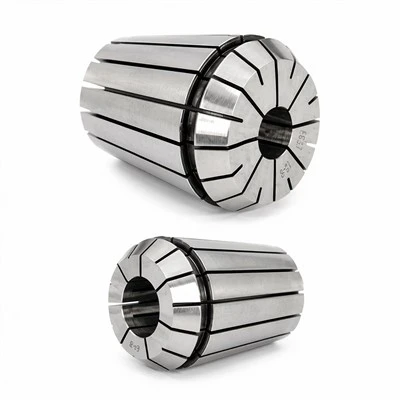
At the end of the day, the lubricant you use with your petroleum pipe thread tools isn’t a afterthought—it’s a critical component of your operations. The right lubricant prevents tool damage, ensures reliable connections, and keeps your projects on schedule. If you’re still unsure which lubricant is right for your tools, or you want to learn more about our line of API-compliant and high-performance thread lubricants, feel free to reach out to our team to discuss your specific application. We’re here to help you make the right choice for your operations.
Lathe Chuck References:
- American Petroleum Institute. Specification 5B: Threading, Thread Gaging, and Thread Performance for Casing, Tubing, and Line Pipe.
- American Petroleum Institute. Recommended Practice 5A1: Field Threading, Make-Up, and Thread Compound Application for Casing and Tubing.
- NACE International. Standard MR0175/ISO 15156: Materials for Use in H2S-Containing Environments in Oil and Gas Production.
- Smith, G. D. (2020). Galling Resistance of Oilfield Thread Lubricants: A Comparative Study. Journal of Petroleum Technology, 72(4), 56–62.
Shun Wei Precision Technology Co., Ltd.
With abundant experience, we are one of the most reliable petroleum pipe thread tools manufacturers and suppliers in China. We warmly welcome you to buy durable petroleum pipe thread tools at competitive price from our factory. If you have any enquiry about cooperation, please feel free to email us.
Address: Room901, Building2, Yijing Apartment, Northeast side of the intersection of Central Avenue and East Fifth Road, Tianjin Free Trade Zone (Airport Economic Zone)
E-mail: sale@sw-csd.com
WebSite: https://www.tjswprecisiontool.com/
