If you’ve ever worked in mining, construction, aggregate processing, or any industry where equipment takes a beating from constant friction, you know abrasion-resistant (AR) steel isn’t just another metal—it’s a difference between downtime that costs you thousands and shifts that run on schedule. Over 12 years as an AR steel supplier, I’ve lost count of the conversations I’ve had with maintenance managers and plant operators who’ve asked the same question: “Why does one AR grade last twice as long as another, even when they’re both labeled ‘abrasion resistant’?” The answer isn’t just surface hardness (though that plays a role) — it’s in the alloy content. Let’s break down how the mix of elements in AR steel turns a regular plate into one that can stand up to relentless wear. Abrasion Resistant Steel
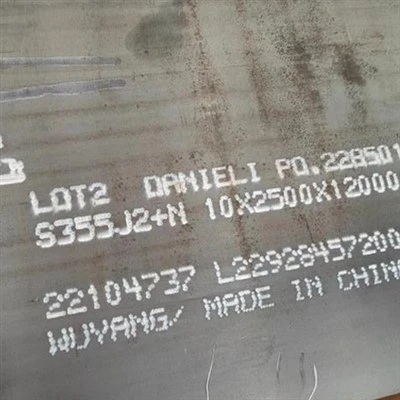
First, we need to ground this in basic metallurgy: AR steel is designed to resist two main types of abrasion: gouging (deep, heavy cuts from large, sharp materials like ore or rock) and scratching (fine, repeated friction from sand, gravel, or powdered materials). A lot of people think harder steel is always better, but that’s not true. A steel that’s too brittle will crack when hit with a large load of rock, leading to catastrophic failure far faster than mild abrasion would. That’s where alloys come in — they tweak the steel’s microstructure to balance hardness, toughness, and wear resistance, without making it unworkable for welding or forming.
Let’s start with the most common and impactful alloy in AR steel: carbon. Wait, I know what you’re thinking — carbon is everywhere in steel, right? But it’s not just a base element here. When you combine carbon with iron, it forms iron carbide, which is super hard. The more carbon you add (up to a point), the more iron carbide you have, which boosts hardness and abrasion resistance. But here’s the catch: too much carbon makes the steel brittle. Our entry-level AR 200 grade, for example, has a carbon content of around 0.20% — it’s easy to cut and weld, but it’s best for light scratching wear, like conveyor belts moving grain or wood chips. Our AR 400 grade, which is built for heavy gouging from crushed rock, has a carbon content of 0.25% to 0.30%. That extra 0.05% of carbon makes all the difference: the iron carbide network is denser, so it can resist being gouged by sharp ore, but we keep it low enough that it still has enough toughness to handle impact without cracking. I once had a customer in the aggregate business who tried to use a higher-carbon plate for their screen panes — it wore out in three months because it was too brittle, and parts cracked off; when they switched to our AR 400, made with that balanced carbon mix, it lasted 11 months. That’s the kind of real-world win that comes from understanding carbon’s sweet spot.
Next up: manganese. Manganese is often called the “workhorse alloy” in AR steel, and for good reason. It does two key things: it deoxidizes the steel during manufacturing, removing impurities that would make it weak, and it increases hardenability — which means the steel can harden more evenly through its thickness, not just on the surface. Wait, hardenability is a big one. If a steel plate only hardens on the outside, the core is still soft, so when you hit it, the hard outer layer cracks and the soft inner layer wears away fast. Manganese fixes that. Our AR 500 grade, which is our heaviest-duty plate for things like bulldozer blades or dump truck liners, has a manganese content of 1.2% to 1.5%. What makes manganese special is its ability to work harden — when you apply pressure or impact, the surface of the steel actually gets harder over time. That’s perfect for parts that take a beating every time they move a load: the more they wear, the harder their surface gets, so they last longer. I had a customer in mining who was using a competitor’s AR plate for their chute liners; after six months, the liners were paper-thin in spots. They switched to our AR 500, and not only did the liners last 10 months, but they noticed less material build-up because the consistently hard surface reduced friction. Manganese’s role in hardenability and work hardening is non-negotiable for high-performance AR steel.
Then there’s chromium. Chromium is the go-to alloy for increasing wear resistance, especially against scratching. It forms chromium carbide, which is even harder than iron carbide — like, way harder. Chromium carbide has a hardness of around 1800 HV (Vickers hardness), while iron carbide is only around 1200 HV. That extra hardness makes it much more resistant to being scratched away by fine, abrasive particles like silica sand. Now, chromium also adds corrosion resistance, which is a bonus if your AR steel is being used in wet, outdoor environments, like coastal construction sites or mines that process water-rich ore. Our AR 450 grade, a workhorse for general heavy-duty applications, has a chromium content of 0.3% to 0.5%, which gives it that extra scratch resistance without making it too brittle. For parts that are exposed to both abrasion and corrosion, like dump truck beds in salt-belt areas in winter, we offer a chromium-enhanced AR 450 with added nickel, which we’ll talk about next. A customer in Florida, where humidity and salt air eat away at metal fast, switched our chromium-alloyed AR 450 for their beach sand processing equipment. They went from replacing parts every four months to every nine months, even with the combination of sand abrasion and salt corrosion. That’s the dual benefit of chromium that I don’t see enough suppliers highlight — it’s not just about wear, it’s about longevity in tough environments.
Nickel is another alloy that plays a supporting but critical role. Nickel doesn’t form its own carbides like chromium or manganese, but it does strengthen the ferrite (the soft iron matrix in the steel) and improve toughness. It also boosts hardenability, so like manganese, it helps the steel harden evenly through the thickness. Where nickel really shines is balancing hardness and toughness. If you have a steel with high chromium and carbon, it can get brittle, but adding a small amount of nickel (usually between 0.2% and 0.8%) softens that brittleness, so the steel can withstand impact from large, heavy materials without cracking. I remember a customer in the scrap processing industry, who deals with huge, sharp pieces of metal being crushed, was having issues with their crusher jaws cracking even with high-grade AR steel. We adjusted the alloy mix for them: kept the chromium for abrasion resistance, added a bit more manganese for work hardening, and bumped up the nickel to 0.6%. The jaws still had the hardness they needed to resist wear, but they didn’t crack anymore — they went from breaking every two weeks to lasting six weeks. That’s the balance nickel provides: it lets you crank up the wear-resistant alloys without sacrificing the toughness you need for real-world impacts.
Molybdenum is the last key alloy I want to talk about, and it’s mostly used in our thickest AR plates, those over 1 inch thick. Thick plates are harder to harden evenly through their thickness, because as the plate gets thicker, the center cools slower during manufacturing, so it doesn’t harden as much as the surface. Molybdenum fixes that by improving hardenability even more than manganese or nickel, so the core of the plate is just as hard and wear-resistant as the surface. For parts like excavator buckets that are 1.5 inches thick, used to dig into hard rock and clay, you need the whole plate to be tough and hard, not just the outside. Our AR 600 grade, designed for these ultra-heavy applications, has a molybdenum content of 0.2% to 0.4%. I once had a customer digging in a mine with extremely hard basalt; they were using a 1-inch thick plate that wore out in 100 hours, and even a 1.25-inch thick plate only lasted 150 hours. When they switched to our 1.5-inch AR 600 with molybdenum, it lasted 300 hours. The molybdenum ensured that the entire 1.5-inch plate was hardened, so even as the surface wore down, the core still had the toughness and hardness to resist gouging. That’s the power of molybdenum for thick-section AR steel — it turns a plate that’s hard on the outside but soft in the middle into a uniformly hard, durable part.
Now, let’s talk about what happens when these alloys are out of balance. A common mistake I see is suppliers cutting corners on alloy content to lower cost. They’ll use less manganese or chromium, or even try to use a lower grade steel and call it AR. The result is a plate that might have high surface hardness from a heat treatment, but no alloy support, so when the first load of rock hits it, the surface cracks and the inner layer wears away fast. I once had a customer come to me with a plate they’d bought from a overseas supplier that was labeled AR 500. The surface hardness checked out at 500 BHN (Brinell Hardness Number), but when we tested the core, it was only 320 BHN. No manganese, no molybdenum, so it only hardened on the surface. Within a month, the plate had cracked and worn through in multiple spots, costing them thousands in downtime. That’s why alloy content isn’t just a number on a spec sheet — it’s what makes that hard surface actually stick around and do its job.
I also want to address a myth I hear all the time: “higher BHN always means better abrasion resistance.” That’s not true either. If you’re moving fine sand, a 550 BHN plate will outlast a 400 BHN one, no question. But if you’re moving large, sharp rock, a 550 BHN plate is likely too brittle, and a 450 BHN plate with the right alloy mix will last longer because it can handle the impact without cracking. The alloy content is what lets you tailor the hardness to the specific application, not just pick the highest number. For example, our AR 400 is perfect for conveyor belts and general construction, with a balanced alloy mix that gives it 400 BHN and enough toughness to handle impact. Our AR 550 is for heavy mining and scrap processing, with higher manganese and chromium for wear resistance, and nickel to keep it tough enough to avoid cracking. Our AR 600 is for the most extreme applications, like excavator buckets and bulldozer blades, with molybdenum for uniform hardening.
After 12 years in this business, I’ve learned that the best AR steel isn’t just about picking a high grade — it’s about understanding what your equipment is going to face day in and day out. Is it fine, repetitive scratching? You need more chromium. Is it heavy, impactful gouging? You need more manganese and nickel for toughness. Is it a thick part that needs to be hard all the way through? You need molybdenum. The alloy content is the foundation of that performance, and it’s what separates a plate that’s labeled “abrasion resistant” from one that actually is.
If you’re tired of replacing AR parts every few weeks, dealing with unexpected downtime, or getting parts that don’t live up to their specs, I’d be happy to walk you through our grades and help you find the right alloy mix for your specific application. Whether you need a thin plate for conveyor liners or a thick, heavy-duty plate for mining equipment, we’ve got the experience and the metallurgy to deliver a solution that cuts your wear costs and keeps your operations running smoothly. Reach out to our team to discuss your needs and get a tailored quote — we’re here to help you make the most of your equipment, no matter how tough the conditions.
High Strength Low Alloy Steel Plate References
- ASTM International. Standard Specification for Pressure Vessel Plates, Alloy Steel, Quenched and Tempered. ASTM A514/A514M-19, 2019.
- Chandran, K.R., and Ashraf, M. “Microstructure and Abrasion Resistance of Low-Alloy Wear-Resistant Steels.” Wear, vol. 271, no. 9-10, 2011, pp. 2232-2240.
- Thelning, N., and Karlsson, B. “The Role of Alloying Elements in Hardenability of Wear-Resistant Steels.” Journal of Materials Engineering and Performance, vol. 18, no. 9, 2009, pp. 1289-1295.
- Bayoumi, M.R., et al. “Effect of Molybdenum Addition on the Abrasion and Impact Resistance of Medium Carbon Steels.” Materials & Design, vol. 32, no. 10, 2011, pp. 4965-4972.
Gnee Steel (Tianjin) Co., Ltd.
As one of the most professional abrasion resistant steel manufacturers and suppliers in China, we also support customized service with low price. We warmly welcome you to buy high quality abrasion resistant steel in stock here from our factory. If you have any enquiry about free sample, please feel free to email us.
Address: No.4-1114, Beichen Building, Beicang Town, Beichen District, Tianjin, China
E-mail: alloy@gneesteelgroup.com
WebSite: https://www.chinavesselplates.com/
