Hey there! If you’ve ever worked with transformers—whether you’re a maintenance tech, a project manager, or just someone who’s curious about how those big power boxes keep the lights on—you’ve probably heard the term “oil conservator” thrown around. And if you’ve dug into specs a little, you might’ve wondered: what’s the deal with the maximum oil level limit in that conservator? Why does it matter anyway, and why can’t you just fill it to the top? As a supplier who’s been making oil conservators for years, I get all the questions folks have about this, so let’s break it down like we chat over a coffee at a job site. Oil Conservator In Transformer
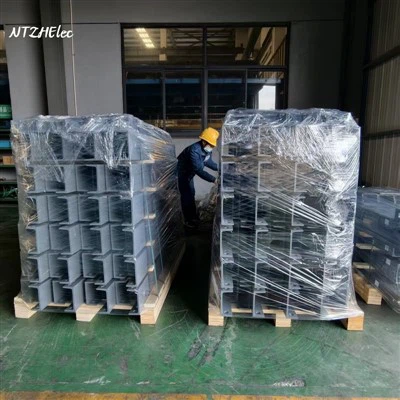
First, let’s keep it simple: an oil conservator (sometimes called an oil pillow tank or expansion tank, but don’t get confused—those are similar but not the same) is basically a small, sealed tank mounted on top of a transformer’s main oil tank. The whole point? Transformer oil does wild things when it heats up and cools down. When the transformer’s running, that oil gets hot, expands, and needs somewhere to go without spilling all over the place or letting air get in. When it cools, it contracts, so it doesn’t create a vacuum that could suck in moisture or dirty air. The conservator solves that problem—acts like a buffer between the oil and the outside air, often with a rubber bladder or a breathing mechanism that only lets clean air (filtered, obviously) in and out.
Now, the max oil level limit. This isn’t some random number a manufacturer pulls out of thin air—it’s tied straight to two big things: temperature swings and the conservator’s design. Let’s start with temperature because that’s the biggest driver. Transformers aren’t static; they’re working around the clock, whether it’s a hot summer day (where the top of the main tank can hit 80°C or more) or a cold winter night (where it might drop below freezing). The oil’s volume changes with temperature—we call that thermal expansion, and mineral oil (the standard stuff used in most transformers) has a thermal expansion coefficient of roughly 0.0007 per °C. Wait, let’s do the math quick to make it real: a 10,000-liter transformer will expand about 7 liters for every 10°C rise. If it goes from 20°C to 80°C, that’s 60°C difference—34 liters of expansion. That has to go somewhere, right?
But here’s the catch: the conservator’s total volume is sized exactly for that expansion. If you fill the conservator all the way to the top, when the oil expands, it has nowhere to go. It’ll either back up into the transformer’s bushings (those are the big insulators on the side that carry power) or—worse—cause the conservator’s seal or bladder to rupture. Ruptured oil conservators = oil leaks, which are a huge mess, bad for the environment, and a fire hazard. Not to mention, you’ll lose the whole buffer function—now air can get into the main tank, moisture can build up, and that’ll make the oil degrade faster, which shortens the transformer’s life.
So what’s the actual number? I can’t just say “10%” or something because it depends on the conservator’s size, the transformer’s rated load, and the climate it’s in. For most standard conservators we supply, the max oil level is set at the “hot oil top” mark—wait, no, let’s get precise. The manufacturer calculates the maximum expected expansion for the transformer’s operating range (usually from the lowest ambient temperature the unit will see to the highest operating temperature at full load). The conservator’s oil level is marked with two key points: the “minimum cold level” (for when the transformer’s at rest, super cold) and the “maximum hot level.” That max hot level is your hard limit. If you fill past that, you’re overfilling, no exceptions.
Wait, but what about different types of conservators? We make two main types: bladder-type and bag-type (don’t get me started on why pillow tanks are a third thing, but that’s a whole other blog). Bladder-type conservators have a rubber bladder that separates the oil from the air. With those, the max oil level is even more critical because the bladder needs room to expand when the oil grows. If the oil’s already at the top, the bladder can’t inflate—so it’ll get pinched between the oil and the tank wall, which wears it out fast. Bag-type is similar, just the bag hangs from the top, same rule: no overfilling. For conservators with a breathing valve (instead of a bladder), the max level is still tied to expansion, but you have to leave enough space for the air cushion so the valve can work when pressure builds.
Another thing people don’t think about: altitude. If the transformer’s going in a high-altitude place, like a mountainous area, air pressure is lower. That affects how much the oil expands too? Wait, no—thermal expansion of the oil itself is still the same, but the conservator’s design has to account for lower pressure so the oil doesn’t get stressed. We adjust the max oil level slightly for high-altitude units, usually a 2-3% lower max limit, because the air cushion needs to compensate for thinner air so the breathing mechanism doesn’t get overworked.
Let’s talk about mistakes we see all the time. When a new transformer is installed, some maintenance techs just fill the conservator to the top “so it’s full for the hot days.” That’s a rookie move—we’ve had to go back to jobs where a unit overfilled in summer, oil came out the vent, and they had to flush the whole main tank because contaminants got in. Or folks in cold climates forget that when winter hits, the oil contracts, so if you filled it to the max in summer, it’ll drop way below the minimum cold level. Too low, and you get air in the main tank, moisture buildup—same problem. It’s a balance, not a set-it-and-forget-it.
Wait, does the oil type matter? Yeah, a little. Some transformers use synthetic ester oils (for fire-resistant applications, like in tunnels or hospitals) instead of mineral oil. Synthetics have a different expansion rate—usually a bit higher, like 0.0008 per °C. So the max oil level for a conservator used with synthetic ester is a touch lower than for mineral oil, because you need more air cushion for the bigger expansion. That’s why at our shop, we don’t just build one-size conservators—we size each one to the exact oil type, transformer rating, and operating climate. No cutting corners here.
Now, why does this matter to you, if you’re buying transformers or handling maintenance? Let’s put it in practical terms: a transformer is a $10k to $100k asset, depending on size. A $200 conservator (wait, no, ours are a bit more, but still) is a small part that keeps that big asset alive. Mess up the oil level, and you’re looking at tens of thousands in repairs, downtime, maybe even a safety incident. We’ve had a client who skipped checking the max level on a 5MVA transformer in Arizona—110°F days, they overfilled, oil leaked onto the ground, EPA came down on them for a $5k fine, and the transformer was out of service for 2 weeks. Total cost way more than if they’d just followed the max level rule.
Here’s what we do for our customers: when we ship a conservator, we include a spec sheet that lists the exact max oil level for their unit, tailored to their transformer’s specs. We also mark the tank with a clear, durable MAX line—no vague “fill here” stuff. And if a customer has a custom setup, like a high-altitude location or synthetic oil, we adjust that line right on the conservator before it leaves our shop. We even offer on-site consultations sometimes, for big projects, to double-check the oil level during installation—no extra charge, because we hate seeing our clients make mistakes that come from not having the right info.
Wait, let’s bust a myth I hear all the time: “The max oil level is just a suggestion.” No, it’s not. It’s a hard limit set by the transformer manufacturer’s engineering team, based on years of testing. They calculate every degree of expansion, every pressure change, every environmental factor, so that max line is there to prevent failures. If you ignore it, you’re not just risking the conservator—you’re risking the entire transformer, which is way more expensive to replace.
Another myth: “You can top it off after the transformer’s been running.” Don’t do that. When the transformer’s hot, the oil’s expanded, so the level looks higher than it will be when it cools. If you top it off while it’s hot, then when it cools, the level will drop below the minimum, and you’ll have that vacuum problem. Always check the conservator’s level when the transformer’s at ambient temperature—meaning it’s been off for at least 8 hours, same as the surrounding air. That’s the only time you should adjust the level, and even then, don’t go over the MAX hot line.
Let’s get back to the supplier side of things, since that’s who I am. We don’t just make oil conservators—we design them to fit the exact needs of the transformer they’re paired with. We’ve seen cheap, generic conservators from overseas that don’t have clear MAX lines, that are sized too small for the transformer’s expansion, and those are the ones that cause all the problems. When you work with us, you get conservators that are tested to handle the thermal swings, that have a clearly marked, accurate max oil level, and that we stand behind. We’re not just selling a part—we’re making sure your transformer lasts as long as it should, no avoidable failures.
So to wrap this up: the maximum oil level limit in an oil conservator isn’t some random rule. It’s a critical spec tied to thermal expansion, conservator design, oil type, and operating climate. Overfill, and you risk leaks, seal ruptures, and transformer damage. Underfill, and you let air and moisture in, which shortens the unit’s life. The key is to stick to the marked MAX line, check levels when the transformer’s at rest, and make sure your conservator is sized and marked correctly for your specific setup.

If you’re working on a transformer project, whether you need a replacement conservator, have questions about sizing, or just want to double-check your max oil level specs, reach out to us. We’re here to help make sure you get the right part, the right info, and no headaches down the line. No sales pitches that feel pushy—just guys who know transformers and conservators, and want you to do the job right.
Pad Mounted Transformer Oil Tank References:
- IEEE Std C57.12.10-2019, “Standard for Liquid-Immersed Transformers—Supplementary Requirements for Conservator-Type Tanks”
- NEMA TR 1-2018, “Transformer Maintenance Guide for Oil Level and Expansion Systems”
- ASEA Brown Boveri (ABB) Technical Manual: Oil Conservator Design and Operation for Power Transformers, 2021
- International Electrotechnical Commission (IEC) 60422-2020, “Guide for the Maintenance of Mineral Insulating Oil in Transformers”
- Local Electrical Contractors Association (LECA) Transformer Safety Handbook, 2022
Nantong Zhihe Electric Co., Ltd.
As one of the most professional oil conservator in transformer manufacturers and suppliers in China, we’re featured by quality products and low price. Please rest assured to wholesale cheap oil conservator in transformer made in China here from our factory. Customized orders are welcome.
Address: NO.202 Jianghai West Road, Hai’an Town, Hai’an City, Jiangsu Province
E-mail: colt.ntzh@gmail.com
WebSite: https://www.ntzhelectric.com/
