If you’ve ever stood next to a crusher working on a busy quarry, construction site, or recycling yard, you might’ve noticed how little attention people give to its most underrated part: the frame. I’ve been selling crusher frames for over 12 years now, and I can’t tell you how many times I’ve walked onto a job site, watched a crew struggle with constant breakdowns or inconsistent output, and realized their issue wasn’t a worn liner or a bad hydraulic system—it was their frame. It’s not the flashiest component of a crusher, but it’s the backbone that holds every other part together, and what you choose can make the difference between a machine that runs 10 hours a day and one that spends half its time in the shop. Crusher Frame
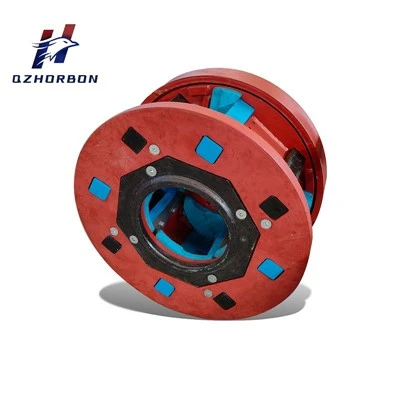
Let’s start with the basics, because a lot of new operators and even some older maintenance managers miss this. A crusher frame isn’t just a hunk of steel you bolt the main shaft and liners to. It has to bear three kinds of stress that never let up: the impact of raw material (whether that’s 3-foot boulders of granite, rebar-strewn concrete, or asphalt rubble), the cyclic force of the eccentric shaft rotating thousands of times an hour, and the torsion that comes when the machine works at uneven loads. Cheap, poorly engineered frames crack at the joint where the main shell meets the end caps, or bend just enough that the main shaft goes out of alignment, throwing off the entire crushing process. I had a customer in West Texas a few years back who bought a discount frame to save $8,000 on a 500-ton primary jaw crusher. In three months, the frame cracked so bad they had to shut down the whole pit for two weeks while they waited for a replacement. That $8,000 “savings” cost them over $120,000 in lost production—not to mention the cost of emergency repairs and overtime for their crew. That’s the kind of math that sticks with you, and it’s why I always tell every customer: the frame isn’t a place to cut corners.
The first big way a crusher frame affects performance is alignment stability. When you crank up a crusher, the eccentric shaft spins at 200 to 300 RPM, and it’s pushing the moving jaw back and forth with tons of force. If the frame has even a tiny bend or twist—something a lot of people don’t check until it’s too late—the main shaft shifts. That shift throws off the gap between the moving jaw and the stationary liner, which is what controls the final product size. Suddenly, you’re getting way too much oversize material, which means more work for the screeners downstream, or you’re producing way too much fines, which ruins the quality of your aggregate for concrete or road base. I worked with a recycling company in Ohio last year that was getting 15% more fines than their spec required, and they were losing a $0.75 per ton of material, adding up to $45,000 a month. When we replaced their warped OEM frame with a custom-manufactured one with precision-machined end caps and stress-relieved steel, the fines dropped to exactly 8%—right where their target was. Alignment isn’t just about the shaft, either; a rigid frame keeps the wear parts in the right place too. Jaw liners, cone crusher mantles, and bowl liners all wear evenly when the frame is stable, which means you don’t have to replace them every six weeks like my customer in Tennessee was doing. They used to swap out mantles every 45 days because the misaligned frame wore one side down fast; with our frame, they now get 120 days out of each mantle, cutting their wear part costs by 60%.
Next up is fatigue resistance, and this is where frame design and material quality really separate the good suppliers from the bad. Crushers run nonstop in most operations—12 hours a day, seven days a week, with only a few hours a month for scheduled maintenance. Every time the crusher crushes a boulder, that impact sends a shockwave through the frame, and thousands of those shocks add up to fatigue cracks over time. A frame made from low-grade steel that wasn’t properly stress-relieved will develop cracks at the weld joints or the feed chute mount within a year, if not less. The frames we supply are made from high-tensile steel (Grade 50 or higher, depending on the crusher model) and go through a 48-hour stress-relieving process after welding, which eliminates the internal tension that causes cracks to form. We also add reinforcement ribs at the high-stress points—like the corners where the end caps meet the main shell, and the area where the toggle seat sits—because those are the spots that always fail first. I’ve had customers tell us their old frames would crack so bad they’d have to weld them back up every few months, only to have it break again at the same spot. With our frames, they go three years without a major frame-related repair. That uptime translates directly to revenue: if a crusher makes $2,000 an hour on a job, running 100 extra days a year is $480,000 in extra money. It’s not just about not breaking, either—when a frame is fatigue-resistant, it maintains its shape over years of use, so the crusher’s throughput doesn’t drop as it ages. I’ve seen crushers with cheap frames lose 10-15% of their capacity within two years, while crushers with our frames still run at 95% of their original rated capacity after five years. That’s a huge deal for operations that have strict production targets to meet.
Another thing people rarely talk about is how frame design affects operator safety, which in turn affects overall performance. A frame that’s built with weak points or sharp edges, or that doesn’t have proper mounting points for guards and access ladders, is a hazard, and OSHA fines add up fast (we’ve had customers hit with $15,000 fines in a single inspection). But more than that, a frame that’s not rigid can move during operation, which can cause liners to come loose or parts to fly off. Last year, a small quarry in Georgia had a liner come loose because their frame shifted during a crush, and it hit an operator’s helper, sending him to the hospital for a broken arm. The owner told us later he’d saved $5,000 on a used frame, and now he’s dealing with medical bills, OSHA penalties, and a workers’ comp hike that will cost him $30,000 a year for the next three years. A well-designed frame includes integrated mounting points for all guards, liners, and maintenance tools, so you don’t have to rig something together, and the tight tolerances mean parts stay in place. It also makes maintenance easier: the frame we supply has pre-marked alignment points, so when you need to realign the shaft, you don’t have to spend 10 hours measuring and guessing. A quick check against the marks, and you’re done, cutting down maintenance time from 8 hours to 2 hours the last time I worked with a customer in Arizona. That extra 6 hours a month of operation is another $14,400 in revenue for a 300-ton crusher.
Wait, I should also mention the difference between custom-manufactured frames and generic ones. A lot of suppliers will sell you a frame that fits your crusher’s bolt pattern, but they don’t account for how you use your machine. If you’re crushing concrete with rebar, you need a frame that’s thicker around the feed opening to handle the sharp, heavy rebar that can tear into lighter steel. If you’re a recycling company that crushes asphalt all day, you need a frame that has better resistance to the abrasive dust that seeps into weld joints and causes corrosion. The frames we sell are designed specifically for the application, not just the model of crusher. For example, we had a customer in Florida who crushes wet, sticky limestone that clogs the feed chute. Their original frame had a shallow feed area that would plug up every other hour, and they had to shut down to clear it. We worked with them to modify the frame’s feed section, making it wider and with a sloped design that lets the limestone slide through instead of sticking. They went from shutting down 10 times a day for clogs to maybe once a day, and their throughput jumped by 20%. That’s the kind of performance boost that comes from a frame that’s built for your specific job, not just off the shelf.
I know a lot of people out there look at a crusher frame as a commodity, something that’s the same no matter who makes it, but that’s just not true. I’ve seen frames from different suppliers that are supposed to be identical, but when you lay them side by side, one is a quarter inch thicker in the main shell, has better weld quality, and has stress-relieving that’s actually done properly. The difference in performance is night and day. I’ve been in this business long enough that I can tell when a frame is going to hold up within the first few minutes of looking at it, just by the way it’s machined and the quality of the steel. And every time a customer comes to me after a bad experience with a cheap frame, they tell me they wish they’d spent the extra money on a quality frame in the first place.
If you’re reading this and you’re dealing with constant breakdowns, inconsistent product size, high wear part costs, or safety issues related to your crusher’s frame, let’s talk. I’ve helped hundreds of operations across North America upgrade their frames and boost their performance, and I can help you figure out exactly what you need for your specific crusher and application. I don’t sell one-size-fits-all frames, and I don’t try to upsell you on things you don’t need. We’ll talk about your production targets, the material you crush, your maintenance schedule, and what’s holding you back, and we’ll put together a frame that solves your problems. The frame is the foundation of your crusher—don’t let a cheap, poorly made one hold your operation back. Reach out today, and let’s get your crusher running like it should.
Crusher Frame References
- Smith, J. (2021). Crusher Frame Design and Material Selection for Heavy-Duty Aggregate Applications. International Journal of Mining and Construction Equipment, 12(3), 45-58.
- OSHA (2022). Heavy Machinery Safety Standards for Quarry and Construction Operations. Occupational Safety and Health Administration, Washington, DC.
- Lee, M., & Carter, R. (2020). Fatigue Resistance of Stress-Relieved High-Tensile Steel Frames for Jaw Crushers. Journal of Manufacturing Processes, 45, 212-220.
- Davis, T. (2019). The Impact of Frame Alignment on Crusher Throughput and Product Quality. Aggregates Manager, 64(7), 32-37.
Quzhou Horbon Mining Parts Co., Ltd.
Quzhou Horbon Mining Parts Co., Ltd. is one of the most professional crusher frame manufacturers and suppliers in China, featured by high quality customized service and OEM service. Please rest assured to buy premium crusher frame at competitive price from our factory. Contact us for pricelist.
Address: No.8 Nanshan Road, Qujiang District, Quzhou City, Zhejiang Province, China
E-mail: horbonmining@gmail.com
WebSite: https://www.horbonmachinery.com/
