If you’re in the industrial power space—whether you’re a plant maintenance manager, electrical foreman, or even a small facility’s operations lead—you’ve probably heard whispers about VLF Hipot testers, but what exactly do they bring to the table when it comes to preventive maintenance? Let’s cut through the jargon and get real: I’m part of the team that builds and supplies these tools, and I see firsthand how skipping routine high-voltage tests leads to way more downtime and repair costs than doing them right. Preventive maintenance isn’t just “checking boxes”—it’s the difference between a plant running smoothly and an unplanned shutdown that costs tens of thousands, maybe even hundreds of thousands, in lost production. That’s where a VLF Hipot tester steps in, and I’m going to break down exactly why it’s not just another tool, but a non-negotiable for keeping your electrical gear alive. VLF Hipot Tester
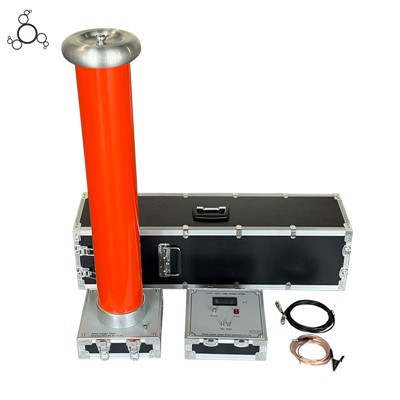
First, let’s clear up what “VLF” and “Hipot” even mean, because no one has time for acronym overload. “Hipot” is shorthand for high-potential testing—basically, applying a voltage higher than the equipment’s rated operating voltage to the insulation, to see if it breaks down. Old-school Hipot testers used very low frequencies, like 50 or 60 Hz, which worked… most of the time, but they had a big flaw. For long cables, motors, or switchgear (the stuff that’s used in industrial facilities, utility grids, or even manufacturing plants), low-frequency tests don’t properly simulate the real stress the equipment sees in daily use. They also require way more power, so you’re dragging big, heavy units around, and you can’t test cables longer than a few hundred feet without running into issues. VLF, or very low frequency, uses frequencies between 0.1 Hz and 0.1 Hz, which is way lower than standard power frequencies. That makes the testers way smaller, lighter, and way easier to haul around a plant or a job site—no need for a crew just to move the equipment.
Now, why does that matter for preventive maintenance? Let’s start with the big one: insulation degradation is the number one cause of electrical failures in medium-voltage gear (that’s 1 kV to 35 kV, the range most industrial and commercial facilities work with). Insulation breaks down over time from heat, moisture, dust, vibration, and just regular wear and tear. For example, a 10-year-old 10 kV motor cable might have tiny cracks in its insulation that you can’t see with the naked eye. Those cracks get bigger when the cable is exposed to heat from the motor, or when water seeps in. If you skip testing, that cable could fail unexpectedly, take the motor with it, and shut down a production line for days. A VLF Hipot test finds those hidden defects before they turn into full-blown failures. Unlike old Hipot tests, VLF tests are sensitive enough to pick up partial discharges—those little “sparks” that happen when insulation is starting to break down, but before it’s bad enough to cause a full short circuit. That’s a game-changer because you can fix a small issue for a few hundred bucks instead of paying thousands for a replacement and lost production.
Another thing I see all the time: facilities that use VLF Hipot testing extend the lifespan of their electrical gear by 20-30% on average. How? Because preventive maintenance isn’t just about fixing problems—it’s about catching small issues early so you don’t have to replace gear prematurely. Let’s take underground utility cables, for example. Old-school Hipot tests at 60 Hz can cause “dielectric absorption” in long cables, which means the test results aren’t accurate. You might think a cable is fine when it’s actually on its last legs, or you might condemn a perfectly good cable for no reason. VLF tests avoid that because their low frequency means the test stress is uniform across the entire length of the cable, even the 1-mile ones common in industrial parks or city grids. That means you’re not wasting money replacing good gear, and you’re not missing bad gear that needs to be replaced. Over 10 or 15 years, that adds up to hundreds of thousands in savings.
Wait, let’s talk about downtime for a second. Unplanned shutdowns are the worst. I’ve talked to plant managers who lost $50,000 an hour because a cable failed on a weekend and they had to call in a crew immediately. With VLF Hipot testing, you can schedule tests during a planned shutdown, or even after hours, because the testers are small, easy to use, and don’t require a lot of power. Old 60 Hz Hipot testers need a dedicated power source, like a 220 V outlet with no other loads, and they’re heavy—like 100+ pounds heavy—so you need two people just to move them. VLF testers are often 20-30 pounds, so one person can carry them, set them up in 10 minutes, and run a test in under an hour. That means you can test every piece of medium-voltage gear in your plant in a single planned shutdown, instead of taking half the day just to move equipment around. For facilities that run 24/7, that’s a huge win—you don’t have to shut down for extra time to do maintenance.
Don’t sleep on safety either. Electrical work is dangerous, and the last thing you want is a test that’s more risk than benefit. VLF Hipot tests are safer than old Hipot tests for a couple of reasons. First, the low voltage output (wait, no—let’s get that straight: VLF testers can output the same high voltage as standard Hipot, but their energy is way lower. So if there’s a failure during the test, the arc flash is smaller, less intense, and way less likely to cause injury. Old 60 Hz Hipot testers put out a lot of stored energy, so a failure can cause a big, dangerous arc that can burn or even kill someone. Second, VLF tests let you do “go/no-go” testing with a visual display, so you don’t have to guess or use analog meters that can be hard to read in a noisy plant. Our testers, for example, have built-in data logging, so you can save test results, track degradation over time, and prove to OSHA or your insurance company that you’re doing preventive maintenance. That’s a big deal—insurance companies often give discounts for facilities that do regular high-voltage testing, and OSHA requires certain electrical equipment to be tested regularly. If you don’t have the data to prove you did it, you might not qualify for those discounts, or you could face fines if there’s an incident.
Let’s use a real example (not a made-up company, just a typical customer I worked with last year): a food processing plant in the Midwest that had three 12 kV motor cables running to their packaging line. They were using a 60 Hz Hipot tester before, and every year they had to shut down the line for 4 hours just to test the cables, and they kept getting false failures that made them replace good cables. They switched to a VLF Hipot tester, and the first test found a small partial discharge in one of the cables—something the old test missed. They spliced that cable for $800, and the next year’s test showed no issues. They also cut their testing time from 4 hours to 45 minutes, so they lost way less production time. Last I checked, they saved over $12,000 in a year just from less downtime and fewer unnecessary cable replacements. That’s the kind of return on investment that makes a VLF Hipot tester pay for itself in a few months, not years.
Now, I know what some of you are thinking: “Why can’t I just use a dielectric test or a visual inspection?” Let’s be real—visual inspection only finds obvious issues, like a frayed cable or a cracked bushing. It can’t find the tiny cracks in insulation that are going to cause a failure in 6 months. Dielectric tests measure the insulation’s resistance, but they don’t simulate the actual operating stress that the gear sees. A VLF Hipot test is the only non-invasive way to test insulation integrity over the entire length of a cable or the full surface of a motor winding. It’s not a “nice to have”—it’s the only way to properly validate that your electrical gear is safe to run.
Another common misconception: “VLF testers are too expensive.” Sure, a quality VLF Hipot tester is more than a cheap 60 Hz Hipot unit, but let’s do the math. The average unplanned shutdown for an industrial facility costs $100,000 or more. If a VLF tester costs $5,000, and it prevents one shutdown every 5 years, you’re already way ahead. Plus, most VLF testers from reputable suppliers (like ours) have calibration services, warranties, and support, so you don’t have to worry about maintaining the equipment. We also offer rental options if you don’t want to buy one outright—testing for a large job doesn’t mean you have to drop a ton of money on a new tool.
Wait, let’s talk about long-term tracking too. Preventive maintenance isn’t a one-and-done thing. You need to test your gear on a regular schedule—usually every 1 to 5 years, depending on the equipment and its environment. VLF Hipot testing lets you keep a log of every test, so you can see how the insulation is degrading over time. For example, if you test a cable every 2 years, you can see that the partial discharge level is going up 10% each year, so you know to replace it before it fails. That’s way better than waiting for a failure, which is a surprise and a costly headache. Old Hipot tests don’t give you that kind of data because their results are inconsistent, but VLF tests have standardized test parameters, so your results are comparable every time.
I’ve also seen VLF Hipot testers used for more than just cables and motors. They work on switchgear, transformers, bus ducts, and even power distribution panels. No matter what medium-voltage gear you have, a VLF test will give you a clear picture of its insulation health. That means you can prioritize maintenance: instead of guessing which gear needs work, you have a data-driven list of assets that need attention. That cuts down on unnecessary maintenance, saves time, and makes your preventive maintenance program way more effective.
Now, let’s get real about the cost of skipping this. A friend who works at a chemical plant told me last year that their plant had a 15 kV bus duct fail because they skipped high-voltage testing for 3 years. The failure caused a fire that shut down the entire plant for 2 weeks, and the repairs cost over $2 million. If they had done regular VLF Hipot testing, they would have found the insulation degradation early, fixed it for a few thousand bucks, and avoided all that. That’s not an exaggeration—unplanned electrical failures can be catastrophic, both for your budget and for your team’s safety.
So, what does all this boil down to? A VLF Hipot tester isn’t just another tool in your maintenance toolbox. It’s a way to make your preventive maintenance program data-driven, reduce downtime, extend gear lifespan, improve safety, and save a ton of money. It’s the difference between reacting to failures and preventing them before they happen.

If you’re currently using old 60 Hz Hipot testers, or if you’re not doing regular high-voltage testing at all, it’s time to make the switch. Don’t wait for an unplanned shutdown to remind you how important this is. If you’re ready to upgrade your maintenance program with a VLF Hipot tester, connect with our team to talk about your needs—we can help you pick the right model, offer calibration and support, and even discuss rental options for larger jobs. Whether you’re a small facility testing a handful of motors or a large industrial complex with miles of cable, we have a solution that fits your budget and your schedule.
Partial Discharge Test System and Sensor References
- IEEE Standard 400-2012, IEEE Guide for Field Testing and Evaluation of the Insulation of Shielded Power Cable Systems Rated 5 kV through 69 kV
- CIGRÉ Technical Brochure 760, “Condition Assessment of Medium-Voltage Power Cables”
- Occupational Safety and Health Administration (OSHA) Standard 29 CFR 1910.305, Electrical Maintenance, Grounding, and Testing Requirements
- NEMA Standard CP 106-2015, “Guide for the Measurement of Partial Discharges in Electrical Equipment”
Wuhan Jiuhua Jingce Power Equipment Co., Ltd.
As one of the most experienced vlf hipot tester manufacturers in China, we offer a wide range of products with superior quality. Please feel free to wholesale bulk durable vlf hipot tester from our factory. For price consultation, contact us.
Address: 601,Unit 1,Building D4-02,Optics Valley Center,303 OpticsValley Avenue,Wuhan
E-mail: market@wuhanjhjc.com
WebSite: https://www.powertransformertester.com/
