If you’re deep in the automotive parts game, you’ve probably heard the term “connector assembly” thrown around at trade shows, in supplier calls, or while troubleshooting a weird electrical glitch under a car. But let’s be real—most of us don’t stop to break down exactly what that wordy phrase means, beyond “those little plastic and metal bits that keep wires from tangling.” As someone who’s spent 12 years sourcing and building automotive connector assemblies for vehicle brands big and small, I’m here to demystify this underrated (but make-or-break) part of every car, truck, and SUV on the road today. Automotive Connector
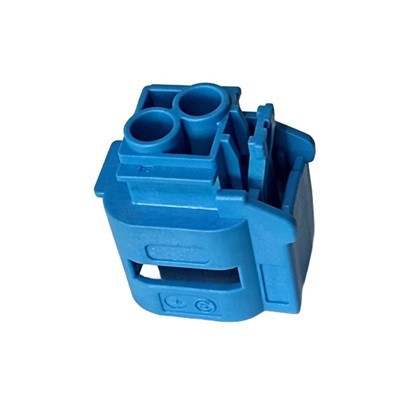
Let’s start with the basics, no engineering textbook jargon allowed. Think of a connector assembly as the middleman between every electrical or electronic part in a vehicle and the power running to it. Want your backup camera to switch on when you shift into reverse? That’s a connector assembly carrying the signal from the camera to the dashboard screen. Need your brake lights to illuminate the second you press the pedal? Same thing—just a different set of wires and pins. It’s not just one tiny part, either: a connector assembly is a whole kit made up of three core pieces, all designed to work together without fail, even when a car bounces down potholes, bakes in 120°F desert heat, or freezes in Chicago winter cold.
First up: the housing. That’s the plastic shell you see when you crack open a wire bundle. It’s not just a random chunk of plastic—this part is custom-molded to fit specific wires and pins, and it’s engineered to stand up to way more abuse than your average household plastic. We use materials like nylon or polycarbonate for most automotive builds, because they don’t crack when exposed to gasoline, road salt, or UV rays from sitting in the sun. Think of it as the armor for the tiny metal bits inside. It also has little latches and keyways—those weird plastic notches and tabs—to make sure you never plug a wire into the wrong spot. I’ve seen so many bad repairs at independent garages where a tech forced a wrong connector in and fried a sensor; those keyways exist for a reason.
Next: the terminals. These are the actual metal pins or sockets that carry electricity between parts. Most are made of copper, coated in a thin layer of tin or gold to prevent rust and make sure the connection stays tight, even after thousands of hot/cold cycles. If you’ve ever pulled apart a spare connector, those tiny shiny metal bits? Those are terminals. Each one is sized for a specific wire gauge—thick wires for the starter motor get big terminals, thin wires for the steering wheel control buttons get tiny ones. The really tricky part here? Crimping the terminal to the wire. Do it wrong, and the wire pulls out the second a mechanic yanks on the bundle, or corrosion gets in and kills the signal. We test every crimp on our production line by pulling the wire with 50 pounds of force—no exceptions. If it slips, that assembly gets tossed. No cutting corners on that step.
Last: the seals. You might not notice these until you see a water leak under a car, but they’re non-negotiable. Every connector assembly has at least one seal—usually rubber or silicone—that locks around the wires where they enter the housing, and fits tight to the part the connector plugs into. Water, road spray, and dirt love to sneak into tiny gaps, cause short circuits, and mess with everything from your radio to your anti-lock brake system. We test every seal by submerging assembled connectors in water at 10 psi for 10 minutes; if a single drop gets inside, it doesn’t leave the warehouse. Period.
Now, here’s the part most people don’t realize: automotive connector assemblies aren’t one-size-fits-all. A connector for a modern EV’s battery management system is totally different from the one used for an old truck’s dome light. EV connectors, for example, have to handle way more voltage (up to 800 volts in some models) than a gas car’s 12-volt system. They also have to be extra secure—if a battery connector comes loose mid-drive, that’s not just a dead radio, that’s a safety hazard. We build high-voltage assemblies with double-seal systems and extra-tough housing materials that can handle extreme current and vibration, no matter how rough the road is.
It’s not just new cars, either. A lot of the work we do is for aftermarket brands and independent garages, who need replacement connectors for older vehicles that are no longer in production. Classic car guys often come to us because the original plastic connectors on their 1990s pickup are cracked, and they can’t find a replacement at the auto parts store. We reverse-engineer those old assemblies, tweak the materials to last longer, and send them over so their old rides don’t get stranded on the side of the highway. That’s the stuff that makes this job worth it, honestly.
Wait, let’s talk about why this matters so much, beyond just “making electricity work.” Have you ever been driving, and suddenly your check engine light pops on for no obvious reason? 9 times out of 10, it’s a bad connection— a loose terminal, corroded seal, or just a worn-out assembly that’s been through 10 years of weather and wear. For fleets, this is a huge deal. A delivery van with a faulty connector assembly for its anti-lock brake system isn’t just an inconvenience—it’s a safety risk for the driver and everyone on the road. That’s why we don’t just build connectors; we build parts that keep vehicles running reliably, mile after mile.
You might be wondering: why go through all this trouble? Why not just solder wires together and skip the whole assembly? Let me tell you. First, wires need to be replaceable. If a single wire goes bad in your car, you don’t want to have to re-solder the whole bundle—you just swap out the faulty connector, and you’re good to go. Second, safety. Soldered joints can break under vibration, and if they touch another wire, you could have a fire. Connectors create a secure, insulated gap that prevents those kinds of short circuits. Third, scalability. Every car has hundreds of connector assemblies—your average modern car has between 50 and 100, depending on how many sensors and electronics it has. Mass producing them to strict standards is way cheaper and more reliable than hand-soldering every connection.
Now, a little behind-the-scenes tea about how we build these. We don’t just punch out parts on a machine and ship them. Every assembly goes through three rounds of quality checks. First, we inspect the housing for cracks or wrong-sized notches right after molding. Then, our techs load the terminals into the housing and do a continuity test—running a small current through the assembly to make sure every pin is connected. Finally, we test the seal, like I mentioned earlier, to make sure no water or dirt can get in. If any step fails, the whole lot gets pulled aside, fixed, or tossed. We’ve had clients come to us after getting cheaper connectors from overseas that failed those tests, and they had to recall dozens of vehicles. We take quality super seriously—no one wants to deal with a product recall over a $2 connector.
Here’s the thing: most drivers will never think about automotive connector assemblies as they’re cruising down the highway. But they’re the unsung heroes of every vehicle. They’re the reason your backup camera works, your brakes stop when you press the pedal, and your phone charges while you drive. They’re also a huge part of the automotive industry’s shift toward EVs and autonomous vehicles. As cars get more electronic features—self-driving sensors, infotainment, battery management—connector assemblies are getting more complex, too. We’re now building assemblies that handle faster data signals for autonomous car cameras, and can handle the super high voltage needed for long-range EVs.

If you’re a procurement manager at an auto brand, aftermarket parts supplier, or independent garage owner who needs reliable automotive connector assemblies, I’m here to help. We work with small local shops and big national brands, and we can build custom assemblies for any make or model, old or new. Whether you need a replacement for a 15-year-old pickup or a custom assembly for a new EV prototype, we can get you parts that meet all safety standards, are built to last, and won’t break the bank. Don’t settle for cheap, untested connectors that’ll fail in a year. Reach out to us to talk through your needs, and we’ll help you find the right assembly for your project.
Industrial Connectors References:
- Society of Automotive Engineers (SAE) J1128: Performance Standard for Automotive Wiring Connectors
- Automotive Industry Action Group (AIAG) CQI-12: Special Process Requirements for Connectors and Wire Harnesses
- International Organization for Standardization (ISO) 16750: Environmental Conditions and Tests for Electrical Equipment in Road Vehicles
- US Department of Energy: Electric Vehicle High-Voltage Component Safety Guidelines
Modelon Precision Industry (Suzhou) Co., Ltd.
With abundant experience, we are one of the most professional automotive connector manufacturers and suppliers in China. Welcome to buy customized automotive connector at competitive price from our factory. If you have any enquiry about pricelist, please feel free to email us.
Address: 1st Floor, Building 22, No. 2628 North Gate Road, Kunshan City, Jiangsu Province, P.R.China
E-mail: jessica_huang2025@163.com
WebSite: https://www.modeloncn.com/
