If you’re in pharma manufacturing, you know how critical pure water is—like, not just “tap water filtered a bit” pure. I get a lot of questions from lab managers, plant engineers, and quality leads on my team: “Why all the hype around industrial RO (reverse osmosis) for pharma water, anyway?” Let’s break this down like I would over a coffee with a new client, no stuffy jargon, just real talk about how we supply these systems and why they’re non-negotiable for pharma. Industrial RO Equipment
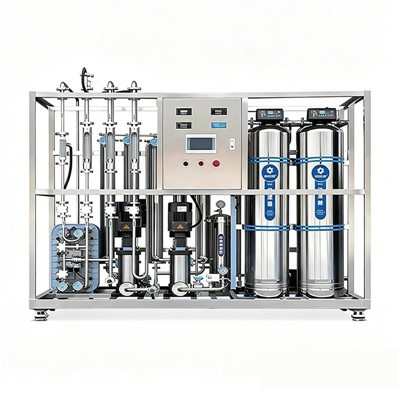
First, let’s start with the basics: pharma water isn’t like the water you use to make coffee at home. Even small contaminants—things like bacteria, endotoxins, heavy metals (lead, arsenic), dissolved salts, or even tiny organic molecules—can mess up drugs. Think injectables: if there’s a stray endotoxin in the water used to mix a vaccine, that could trigger a dangerous immune reaction in patients. Or oral pills: residual heavy metals might build up over time in someone’s system. That’s where industrial RO comes in. It’s not the same as the under-sink RO you have in your kitchen, which mostly filters out limescale. Our industrial systems are built for pharma’s strict standards, designed to hit those purity levels regulators like the FDA and ICH require.
Wait, let’s be clear: RO is just one step in a pharma water system, right? But it’s the workhorse that does the heavy lifting. Let’s walk through how it fits into a typical process. First, you’ve got pre-treatment—you can’t just run raw tap water straight into an RO unit. Raw water has chlorine, which will destroy the RO membrane (they’re made of thin polymer, chlorine eats through that like acid). So pre-treatment usually includes a carbon filter to remove chlorine, a water softener to get rid of hard water minerals that cause scaling, and maybe a security filter (like a 5-micron cartridge) to catch any big gunk that could damage membranes.
Once pre-treatment is done, the water goes into the industrial RO skid, which is basically a bunch of RO membranes arranged in pressure vessels. Here’s the fun part about RO: it uses high pressure (we’re talking 150-300 psi, way more than your kitchen faucet) to push water through a semi-permeable membrane. The membrane has tiny pores—like, 0.0001 micons small—so it only lets water molecules through. Everything else: salts, metals, bacteria, endotoxins, even small organic compounds, get left behind in what we call “concentrate” (or brine, if you’re being technical). That concentrate gets drained away, and the water that passes through is called permeate.
For pharma, this permeate isn’t quite end-product water yet. Sometimes we’ll pair RO with a second pass (double-pass RO) if the plant needs really high-purity water, like for injectables. Or we’ll add a polishing step after RO, like electrodeionization (EDI) or distillation, to get rid of any leftover trace contaminants. But here’s the key point: without that initial RO step, those polishing steps would have way more work to do, and they’d be less effective. RO removes 95-99% of dissolved salts, 99% of bacteria, and almost all endotoxins—so it cuts the load for the rest of the system.
Let’s talk about why this is non-negotiable for pharma specifically, not just any industry. Pharma has super specific water standards: there’s Purified Water (PW) and Water for Injection (WFI), which is the big kahuna for injectables. RO is actually the foundation of both. For PW, RO alone is often enough if it’s maintained right, because it hits the conductivity and purity specs the FDA requires. For WFI, most facilities use double-pass RO plus distillation or EDI, but again, RO is the starting point.
I see a lot of clients underestimate how important RO maintenance is, though. Membranes get dirty over time—scaling from leftover minerals, biofouling from bacteria, even organic matter gumming up the pores. That’s why our industrial RO skids come with automatic cleaning systems (CIP, or clean-in-place, which is a standard industrial term) so you can flush the membranes with a mild acid or base solution without taking the whole system offline. We also do monthly performance checks for conductivity and rejection rate—if rejection drops below 95%, that’s a sign the membranes need cleaning or replacing. I always tell clients: skimping on RO maintenance is a fast track to failing a regulatory audit, and no pharma plant wants that on their record.
Another big use case for industrial RO in pharma: making buffer solutions. Buffers are critical for things like drug formulation, chromatography in lab testing, and cell culture for biotech drugs (like monoclonal antibodies). If your buffer water has even a tiny amount of heavy metal, it could throw off the pH balance or kill the cells you’re culturing. RO ensures the water for those buffers is consistent every time, which is huge for batch-to-batch quality—something pharma can never cut corners on.
Wait, let’s throw in a real example. Last year, we worked with a mid-sized biotech company that was struggling with their old water system. They were using a single distillation step for PW, but distillation is slow, energy-heavy, and wasn’t removing all the trace organic contaminants their new gene therapy required. We installed a double-pass industrial RO system, paired with EDI, and their water purity went up—they even passed a surprise FDA audit three months later, which was a big win. They cut their water costs by 30% too, because RO uses way less energy than distillation. That’s a win-win: better quality, lower operational costs.
But let’s be honest, it’s not just about the water itself. Industrial RO systems for pharma have to be built to meet cGMP (current Good Manufacturing Practices) standards. That means the materials we use are stainless steel 316L, which is corrosion-resistant and easy to clean (no rust that could leach into water). The skids are designed so all pipes are sloped correctly to prevent stagnant water, which is a breeding ground for bacteria. We also add UV sterilization after RO to catch any bacteria that might have snuck through, and continuous monitoring systems that track pH, conductivity, and total organic carbon (TOC) in real-time. Regulators love that because it’s traceable—you can pull a report of water quality from any time, which is required for audits.
I get it, some plant managers might think, “Can’t we just buy a big kitchen RO for our plant?” No way. Kitchen RO is made for home use, so it can’t handle the constant, high-volume demands of a pharma plant. Our industrial systems can process 10,000 to 100,000 gallons per day (even more for large facilities) and are built to run 24/7, 365 days a year, with minimal downtime. Kitchen RO would break in a week under that kind of load.
Another thing: sustainability. Pharma plants use a ton of water, and industrial RO systems are way more water-efficient than old methods like distillation. Sure, there’s concentrate waste, but modern RO skids have reclaim systems that can reuse up to 50% of that concentrate for non-critical uses, like washing equipment. That’s a big deal for pharma’s sustainability goals, which regulators are pushing harder and harder every year.
Wait, let’s address a common misconception: some people think RO removes all good minerals, but in pharma, we don’t want minerals in the water anyway. Drugs are formulated to have specific ingredients—adding extra minerals would change the composition, which could make the drug less effective or even unsafe. RO leaves you with ultra-pure water, which is exactly what you need.
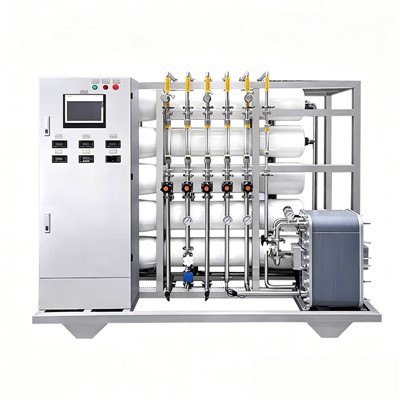
So, putting it all together: industrial RO is the backbone of pharma water systems. It takes raw water, removes almost all contaminants, reduces load on downstream polishing steps, meets strict regulatory standards, and cuts operational costs. But it’s not a set-it-and-forget-it system—you need the right equipment, regular maintenance, and monitoring to keep it working right.
RO Purified Water Equipment If you’re a pharma plant engineer, quality manager, or operations lead who’s dealing with water purity issues, high operational costs, or upcoming regulatory audits, let’s chat. We’ve worked with everything from small biotech startups to large generic drug manufacturers, and we can help you pick the right industrial RO system that fits your needs, not a one-size-fits-all model. No sales pitches, just real advice for your facility.
References
- U.S. Food and Drug Administration. (2022). Guidance for Industry: Water Systems in Pharmaceutical Manufacturing.
- International Council for Harmonisation of Technical Requirements for Pharmaceuticals for Human Use. (2021). ICH Q7 Good Manufacturing Practice Guide for Active Pharmaceutical Ingredients.
- World Health Organization. (2020). Guidelines on Water Sanitation in Pharmaceutical Production.
- Reverse Osmosis Technical Association. (2023). Industrial Reverse Osmosis Systems for High-Purity Water Applications.
- Pharmaceutical Engineering Magazine. (2022). “Optimizing Water Systems for Injectable Drug Manufacturing.”
Shandong Yanuo Environmental Protection Equipment Co., Ltd.
We’re well-known as one of the leading industrial ro equipment manufacturers and suppliers in China, featured by quality products and good price. Please rest assured to buy bulk industrial ro equipment made in China here from our factory. Customized orders are welcome.
Address: North Side of the Road, 1,000 Meters West of the Intersection of Fenghuangshan West Road and Provincial Highway S102, Wangfu Subdistrict, Qingzhou City, Weifang City, Shandong Province.
E-mail: ynhb.499973983@gmail.com
WebSite: https://www.zkyaruo.com/
