If you’ve ever shipped a full container load (FCL), you know there’s no bigger headache than staring at a quote that looks like it was written in a foreign code of numbers and abbreviations. As an FCL supplier who’s spent the last 12 years walking small business owners, factory managers, and importers through every step of calculating their shipping costs, I’ve lost count of how many times someone has called me panicking, thinking they’re being overcharged for a route from Shanghai to Los Angeles, or confused why a 40-foot container costs twice as much as a 20-foot one. The truth is, FCL shipping cost isn’t a random number pulled from a carrier’s price book—it’s a combination of fixed fees, variable market factors, and specific details of your cargo. Today, I’m breaking this down step by step, like I would with a new client sitting across my desk, so you don’t have to guess or get blindsided by hidden charges. Full Container Load
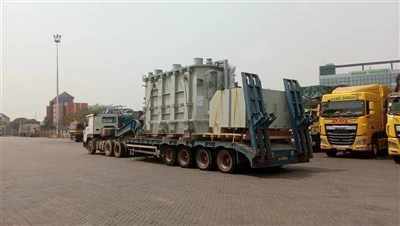
First, let’s start with the basics: what is an FCL shipment? Unlike LCL (less than container load), where you share space with other shippers, FCL means your cargo fills an entire container, so you don’t split costs with anyone else. The standard containers most people use are 20-foot (often called a TEU, or twenty-foot equivalent unit) and 40-foot (often a FEU, or forty-foot equivalent unit), plus the 40-foot high cube, which is a few feet taller for bulkier goods. The container size is not just a size preference—it’s one of the biggest drivers of your cost, so you need to get this right before you even ask for a quote. I’ve seen a new importer order a 40-foot container when their goods only fit in 2/3 of a 20-foot one, and end up paying 30% more for space they never used. That’s a $1,200 mistake on a route from Guangzhou to Rotterdam, just to give you a real example. So step one: confirm your container size based on your cargo’s total volume and weight, not just what you think you need.
Next, the core of any FCL quote: the ocean freight rate. This is the biggest line item, usually making up 60-70% of your total cost, but it’s not set in stone. Ocean rates fluctuate constantly, and they’re tied to three main things: the trade lane, the season, and the current capacity in the shipping market. For example, the transpacific lane (Asia to North America) has different rates than the Europe to South America lane, and during peak seasons—like back-to-school shipping in August or holiday goods in October—rates can jump 20-30% in just a month. A few years ago, during the 2021 supply chain crunch, I watched Shanghai to Los Angeles rates go from $1,800 in January to $15,000 in October. That’s not a typo. It’s why I always tell clients to lock in their rate 2-4 weeks before their cargo is ready to ship, if possible. Also, keep in mind: ocean rates are quoted per container, not per cubic foot or pound, so whether you fill a 20-foot container with light textiles or heavy machinery, the base rate is the same (as long as it doesn’t exceed weight limits, which we’ll talk about soon).
Once you have your ocean rate, it’s time to add the origin charges—these are fees at your loading port, and they’re almost never included in the base ocean rate. Every port has its own set of origin charges, but the most common ones are: THC (Terminal Handling Charge), which covers the port’s cost to load and unload the container at the terminal; BAF (Bunker Adjustment Factor), a fuel surcharge that carriers add when oil prices go up; DOC (Documentation Fee), for preparing and filing your shipping paperwork; and Custom’s Clearance Fee at origin, if you’re using our supplier’s customs services. Origin charges add up quickly. For a 20-foot container leaving from Ningbo, I’ve seen origin fees range from $450 to $650, depending on the port’s efficiency and current port congestion. I always make sure to list these as separate line items for clients, so there’s no confusion—no one likes a “surprise” fee at the final bill.
Then there are destination charges, which apply when your container arrives at the port where it’s being delivered. These are just as variable as origin charges, and they often trip up first-time shippers. Destination charges include: D/O (Delivery Order Fee), which is the fee to get the official document to pick up your container at the port; THC at the destination port, mirroring the origin THC; customs clearance fee at the destination, if you’re working with a local broker; and sometimes a storage fee, if you don’t pick up your container within the free demurrage period (we’ll explain demurrage and detention next, because those are two of the most misunderstood fees in FCL shipping). Demurrage is the fee the port charges you for keeping the container at the port longer than the free allotted time—usually 3-7 days, depending on the carrier and lane. Detention is the fee the carrier charges you for keeping the container at your facility longer than the free time, after you’ve picked it up. A lot of people mix these up, but the difference matters: if you take 10 days to pick up your container from the port, you pay demurrage. If you keep the container at your warehouse for 12 days after delivery, you pay detention. Both are per day, and they can add $50-$100 per day, so planning your pickup and delivery timeline is key to avoiding extra costs. I had a client last year who waited 14 days for their importer’s customs forms, and they ended up paying $1,200 in demurrage fees—all because they didn’t know about the free 7-day window.
Now, two more critical factors that can swing your cost by thousands of dollars: weight limits and cargo type. Every container has a maximum gross weight (container plus cargo) that’s set by international shipping rules, and it varies by size. A 20-foot container usually has a max gross weight of 48,000 lbs, while a 40-foot standard is 48,500 lbs, and a 40-foot high cube is 49,000 lbs. If your cargo exceeds that weight, you’ll have to either remove some items to stay under the limit, or pay an over-weight surcharge—and that surcharge isn’t small. I’ve seen over-weight surcharges range from $150 to $500 for every 1,000 lbs over the limit, depending on the lane. That’s why we always ask clients for a precise inventory of their cargo, including weight per item, before we give a quote. The other big one is cargo type: if you’re shipping hazardous materials (like chemicals, batteries, or flammable goods), you’ll have special handling fees, sometimes called HDS (Hazardous Handling Surcharge), because carriers have to follow strict safety rules for these goods. Refrigerated containers (reefers) also have extra costs, because you’re paying for power to keep the temperature regulated—we even have to add a daily reefer management fee to monitor temperatures during transit. And if you’re shipping high-value goods, you might want to add cargo insurance, which is another cost separate from the base shipping fees. A lot of people skip insurance, but I’ve had clients who lost $20,000 worth of electronics in a container accident, and they had no insurance to cover the loss. It’s a small cost (usually 1-2% of the cargo’s value) that’s worth every penny.
Wait, did I mention hidden fees? No one likes hidden fees, so let’s talk about the ones that aren’t always on the initial quote. Things like inland drayage, which is the cost to move the container from the port to your facility (or from your facility to the origin port)—that’s a big one for clients who are shipping to or from a location that’s not right at the port. For example, if you’re shipping from a factory in Shenzhen, which is 60 miles from Yantian Port, the drayage fee will be $200-$300, depending on the size of the container. Another hidden fee is peak season surcharge (PSS), which is added during busy times, and it’s not always advertised on the carrier’s public rates. Also, some carriers will charge a empty container repositioning fee if you’re shipping a one-way load from a port that has too many empty containers, but that’s less common for standard trade lanes.
Now, let’s put this all together with a real example, so you can see how it works. Let’s say you’re a small apparel brand in Los Angeles, shipping a full 20-foot container of cotton t-shirts from Shanghai, and your cargo total is 32,000 lbs, which is under the 48,000 lb max, so no over-weight surcharge. Here’s the breakdown of your total FCL cost:
- Ocean freight rate: $1,900 (Shanghai to Los Angeles, 20-foot container, current mid-year rate)
- Origin charges (Shanghai Port):
- THC: $550
- BAF: $220
- DOC: $80
- Origin customs clearance: $100
- Total origin: $950
- Destination charges (Los Angeles Port):
- Destination THC: $500
- D/O Fee: $150
- Destination customs clearance: $120
- Total destination: $770
- Drayage (port to your warehouse in downtown LA): $300
- Cargo insurance (1.5% of $15,000 cargo value): $225
- Demurrage (you pick up in 5 days, so no extra fee)
- Detention (you return the empty container in 3 days, no extra fee)
That’s a total of $1,900 + $950 + $770 + $300 + $225 = $4,145. Now, if your cargo was heavier—say 50,000 lbs, which is 2,000 lbs over the 48,000 lb max—the over-weight surcharge would add $2,000 (at $1,000 per 1,000 lbs, which is common for US lanes), bringing your total to $6,145. That’s a huge difference, and it’s exactly why confirming your cargo’s weight and container size is the first step.
A common question I get: can I negotiate my FCL cost? The short answer is yes, but it depends on a few things. If you’re a regular shipper (sending 5+ containers a year), you can usually get a discounted ocean rate from carriers, because they value consistent business. Also, booking your freight well in advance—at least 2 weeks before your cargo is ready—gives you more leverage to lock in a lower rate, instead of paying peak season prices at the last minute. On the flip side, if you only ship once a year, you might not have as much negotiating power, but that’s where a good FCL supplier comes in: we have existing relationships with multiple carriers, so we can shop around for the best rate and lowest fees, instead of you dealing with one carrier directly.
Another mistake I see all the time: ignoring the free time for demurrage and detention. Every carrier offers a different amount of free time, but it’s usually 3-7 days at origin, 3-7 days at destination, and 3-7 days for detention. If you miss that window, the fees add up fast. A client of mine in Dallas once waited 12 days to pick up a container of toys, and they paid $900 in demurrage fees—more than the cost of the storage unit they could have rented to hold the container temporarily. I always tell clients to build that free time into their timeline, or if they know they’ll need more time, to request an extension from the carrier early, which almost always gets approved for a small fee, instead of the daily penalty rate.
Now, let’s talk about how to get an accurate FCL cost, not a vague estimate. The worst thing you can do is ask for “a quote for a 20-foot container from China to Europe” and expect an exact number. To get an accurate cost, you need to provide three key details: first, the exact origin and destination (not just “China” and “Europe”—name the city or port, because inland drayage changes everything), second, your cargo’s total volume (in cubic meters or cubic feet) and total weight (in pounds or kilograms), and third, any special requirements (like hazardous cargo, reefer container, insurance, or customs services). The more specific you are, the less likely you are to get a surprise bill. As your FCL supplier, we always ask for these details upfront, because there’s no one-size-fits-all FCL rate. It’s personal to your shipment.
Wait, let’s address a myth I hear all the time: “FCL is always cheaper than LCL.” That’s not true. If you have a small shipment—say, 5 cubic meters of goods—LCL might be cheaper than paying for an entire 20-foot container. But if your shipment is 15+ cubic meters, FCL is almost always the better deal, because LCL charges you per cubic foot, plus fees, while FCL is a flat rate per container. We usually help clients figure out which is cheaper, but that’s part of the service we provide.
So, to wrap this up, calculating FCL shipping cost is a 7-step process: 1) Choose your correct container size based on cargo volume and weight; 2) Get the current ocean rate for your trade lane; 3) Add all origin port fees; 4) Add all destination port fees; 5) Add inland drayage fees; 6) Account for any special cargo fees (over-weight, hazardous, reefer); 7) Budget for insurance and extra fees like demurrage or detention if needed. It’s not as complicated as it sounds once you break it down, and having a trusted FCL supplier to guide you through each step eliminates the guesswork.
If you’re planning an FCL shipment and want a clear, accurate breakdown customized to your cargo, we’re here to help. Don’t leave your shipping cost to chance—get in touch with us to discuss your requirements, and we’ll provide a no-obligation quote tailored to your needs.
Vehicles Shipping References
- International Chamber of Commerce. (2020). Incoterms 2020: Rules for the Use of Domestic and International Trade Terms. ICC Publishing.
- Federal Maritime Commission. (2022). Understanding Container Shipping Costs and Fees. U.S. Government Publishing Office.
- Drewry Maritime Research. (2023). Global Container Freight Rate Benchmark Report. Drewry Publications.
- World Shipping Council. (2021). FCL Shipping Best Practices for Small and Medium-Sized Businesses. World Shipping Council.
Speed Supply Chain (Guangzhou) Co., Limited
Speed Supply Chain (Guangzhou) Co., Limited is a licensed NVOCC and first-level freight forwarder in China. With a professional team, we deliver reliable, efficient and cost-effective full container load service for global customers. If you have any enquiry about quotation, please feel free to email us.
Address: Room 2001-2002, Dongzhao Building, No. 515 Dongfeng Middle Road, Yuexiu District, Guangzhou, Guangdong, China
E-mail: mika.li@speedsucc.com
WebSite: https://www.speedsupplychain.com/
