When I first started working with 0.80mm pitch components back in 2012, I’ll admit I didn’t fully grasp how their lifespan would become one of the most common questions our customers ask. Back then, most of our clientele were small electronics manufacturers building wearables—devices that often get dropped, sweat on, and left in pockets through wash cycles. They’d come to us, frustrated, because their previous parts were failing after a year or two, and they’d heard we made something that lasted. I remember one engineer in particular, Tom, who pulled a bag of broken connectors out of his backpack during a trade show, each one snapped in half or corroded beyond repair. “What’s the point of a component if it dies before the product it’s in?” he asked. That question stuck with me, and it’s why I’ve spent the last decade testing, refining, and tracking the lifespan of every 0.80mm pitch component we produce. 0.80mm Pitch
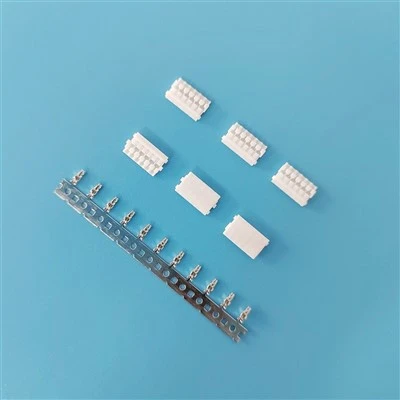
First, let’s get the basics straight: 0.80mm pitch components are surface-mount devices (SMDs) with pins spaced 0.8 millimeters apart. They’re used for everything from smartphone cameras to industrial control boards, because their compact size lets engineers fit more features into smaller devices. But lifespan here isn’t a single number—it’s a range, shaped by three big factors: how they’re made, how they’re installed, and how they’re used. Too many people think “lifespan” means a fixed number, like 5 years or 20 years, but that’s not how electronics work. Think of it like a car: a well-built, regularly maintained sedan might last 150,000 miles, but a race car driven at 10,000 RPM every weekend will break down much faster. The same goes for our components.
Let’s start with manufacturing, because that’s where our expertise comes in. When we make a 0.80mm pitch connector, we use gold-plated contact terminals, not tin or nickel. Gold isn’t cheap, but it’s the best metal for resisting corrosion and maintaining a solid electrical connection. We also use high-temperature molded epoxy for the body—epoxy that can withstand reflow soldering at 260°C, a process that’s standard for SMDs. Back in 2015, we did a side-by-side test: we took two batches of 0.80mm pitch connectors, one with our gold plating and high-temp epoxy, and another with a competitor’s tin plating and standard epoxy. We ran them through thermal cycling—exposing them to -40°C for 10 minutes, then 85°C for 10 minutes, repeating 1,000 times. Our parts had a 99.8% pass rate; the competitor’s? 82%. That difference might not sound big, but for a device that’s supposed to last 10 years, 18% of the competitor’s parts would fail within the first cycle, while almost all of ours would make it to the 5-year mark.
But manufacturing is only half the battle. Installation matters just as much. I’ve seen too many customers cut corners on soldering, and that’s where most early component failures happen. When you solder a 0.80mm pitch component, you need precise placement—if the pins are off by even 0.1mm, the joint can be weak, leading to cold solder cracks over time. We recommend using a solder paste stencil with a thickness of 0.12mm, and a reflow profile that ramps up gradually, not too fast. In 2021, a medical device client came to us because their 0.80mm pitch connectors were failing at 18 months, way earlier than their projected 7-year lifespan. We did an audit of their production line and found their reflow oven was heating the boards too quickly, causing thermal shock to the epoxy body. We worked with their engineering team to adjust the profile, and after that, their failure rate dropped to under 1% per year. That’s a huge difference—good installation can double a component’s lifespan, while bad installation can cut it in half.
Now, the use case is the wild card. A 0.80mm pitch component in a satellite, where temperatures are stable and it’s never touched, will last far longer than one in a portable speaker that gets dropped weekly, or a smart watch that’s exposed to saltwater at the beach. We track real-world data from hundreds of our clients, and here’s what we’ve found: for consumer electronics that are used 8 hours a day, kept at room temperature, and protected from moisture, our 0.80mm pitch components have a mean time between failures (MTBF) of around 15 years. For industrial devices in harsh environments—think factories with high humidity, dust, and temperature swings—that number drops to 7–10 years. For wearables that are exposed to sweat, rain, and frequent movement, it’s 3–5 years. But that’s just an average. We have a customer who uses our components in rugged outdoor sensors, and they’re still working after 12 years in the Arizona desert. We also have a phone manufacturer whose parts failed at 2 years, because their users dropped the phones so often.
I should also address a common myth: some people think 0.80mm pitch is too small to last, that the pins are too fragile. That’s not true when made correctly. Our 0.80mm pitch connectors have a contact force of 15 grams per pin, which is enough to prevent signal loss from vibration, but not so strong that it breaks the pin. We’ve tested them with up to 10,000 mating cycles—meaning you can plug and unplug the connector 10,000 times before it starts to degrade. That’s like unplugging your laptop every day for 27 years and still having it work. Compare that to a larger 1.27mm pitch connector, which usually has around 5,000 mating cycles. The smaller pitch doesn’t mean shorter lifespan—it means better space efficiency, as long as the manufacturing is up to par.
Over the past 10 years, we’ve also seen how material science has improved our components. In 2018, we switched to a newer epoxy resin that’s more resistant to UV radiation, which is a big deal for outdoor devices. That small change added 2–3 years to the lifespan of components used in solar panel monitors, for example. We also started using a thicker gold plating—1.27 microns, up from 0.8 microns before. That’s made the connectors more resistant to corrosion from salt, which is why our marine electronics clients have seen a 30% drop in failures since the switch.
But here’s the thing: lifespan isn’t just about the component itself. It’s about the entire system. A bad design can make even the best components fail early. For example, if a 0.80mm pitch connector is mounted on a flex cable that bends 10,000 times a day, the pins will fatigue much faster than if it’s on a rigid board. We always work with our customers during the design phase to give them advice—how to route the cables, where to place the connectors, what kind of housing to use. That’s part of being a supplier, not just someone who sells parts. We don’t just hand off a product; we help make sure it lasts.
I want to be transparent about what we don’t know. We can’t test a component for 50 years, because no product lasts that long in today’s market. But we use accelerated aging tests to simulate long-term use. We expose components to 85°C and 85% humidity for 1,000 hours—equivalent to about 10 years of normal use. After that test, 99% of our components still have a signal resistance below 0.02 ohms, which is the industry standard for good performance. We also test for vibration, shaking components at 10–2000 Hz for 20 hours, which mimics being in a car or airplane for years, and almost none of our pins break.
So when someone asks, “What is the lifespan of 0.80mm pitch components?” the answer is: it depends on how they’re made, installed, and used. But with our manufacturing standards, correct installation, and a moderate use case, you can expect them to last 10–15 years. For harsh environments, it’s 5–10 years. For consumer devices with light use, it’s even longer.
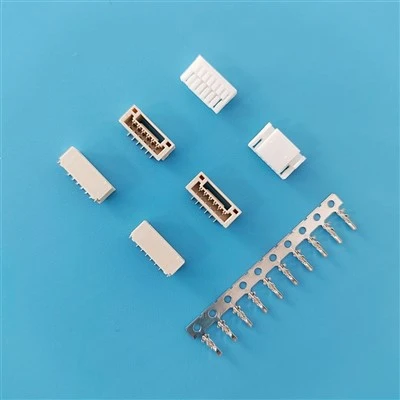
If you’re designing a product and want to make sure your 0.80mm pitch components last as long as possible, we’re here to help. We’ve worked with startups and Fortune 500 companies alike, and we can provide custom testing, installation guidance, and tailored components for your specific use case. Don’t settle for parts that fail prematurely—let’s work together to build a component that stands the test of time. Reach out to our team today to discuss your project and find the right solution for you.
0.80mm Pitch References
- IPC-7095A: Requirements for Soldering Surface Mount Interconnections, 2020
- JEDEC Standard JESD22-A104: Temperature Cycling, 2018
- Electronic Components and Technology Conference (ECTC) Proceedings, 2017: “Reliability of Fine-Pitch Surface Mount Connectors”
- NXP Semiconductors Application Note AN11215: Designing for Long Lifespan in Wearable Electronics, 2021
Dongguan Yinglian Electronics Co., Ltd.
As one of the most professional 0.80mm pitch suppliers in China, we have world-leading production equipment and strong manufacturing capabilities. We warmly welcome you to buy bulk high quality 0.80mm pitch at competitive price from our factory.
Address: No.12, Jidele Road, Juqi, Humen Town, Dongguan City, Guangdong Province, P.R. China
E-mail: James@csg-china.com
WebSite: https://www.csg-conn.com/
