If you’ve ever stepped into a manufacturing plant, a refinery, a food processing facility, or even a commercial HVAC system, chances are a screw gas compressor was running quietly in the background, moving gases or pressurizing air that keeps operations on track. For a screw gas compressor supplier, the most common question I hear from customers isn’t about how these machines work—it’s how to pick the right one for their specific needs. I’ve been in this industry for 12 years, and I’ve seen too many companies waste money on compressors that are too big, too inefficient, or simply not designed for the gases they’re handling. The wrong choice can lead to sky-high energy bills, unplanned downtime, and even safety hazards. Today, I’m breaking down the practical, science-backed steps I walk every customer through to find a compressor that fits their application like a glove. Screw Gas Compressor

First and foremost, you need to know exactly what gas you’re moving. This sounds basic, but it’s the step most people skip, and it’s where mistakes start. Not all gases are the same, and screw compressors aren’t one-size-fits-all for every type. Let’s say you’re handling a non-corrosive gas like atmospheric air or nitrogen. Those are pretty straightforward, but if you’re moving something more volatile, like propane, ammonia, or natural gas, you need a compressor built for that gas’s properties. Ammonia, for example, is highly corrosive to carbon steel if left uncoated—so a compressor with a stainless steel rotor coating or lined internal components is non-negotiable here. Natural gas, on the other hand, is often mixed with small amounts of sulfur compounds that can cause hydrogen embrittlement in standard compressor parts, so you’ll need materials resistant to that.
Another critical factor here is whether the gas is flammable or inert. Flammable gases require compressors rated for hazardous locations, meaning they have explosion-proof motors, sealed electrical connections, and components that don’t generate sparks (called “non-incendive” parts). I once worked with a small refinery that tried to use a standard air compressor for their natural gas line. It lasted three days before the motor’s electrical spark ignited a small gas leak—no one was hurt, but they had to shut down operations for a week to replace the compressor and reroute electrical systems. That cost them more in downtime than a proper hazardous-rated compressor would have upfront. Inert gases like carbon dioxide or argon don’t need those extreme ratings, but they still require seals that can handle the gas’s pressure and density.
Next, calculate your required capacity and pressure—two numbers that go hand-in-hand and can make or break your compressor choice. Capacity, usually measured in cubic feet per minute (CFM) or cubic meters per hour (m³/h), is how much gas your compressor needs to move every minute. Pressure, measured in pounds per square inch gauge (PSIG) or bar, is how much you need to raise that gas to. The worst mistake I see here is companies over-sizing their compressors. A lot of people think “bigger is better,” but a compressor that’s too large for your needs will run at part load almost all the time. Screw compressors are most efficient when they’re operating between 70% and 100% of their rated capacity; run them at 30% capacity, and their energy efficiency can drop by 30% or more. That means your $10,000 investment will cost you an extra $2,000 a year in electricity—money that could have gone to other parts of your business.
Let me give you an example from a food processing client a few years back. They had a 5,000 CFM demand for pressurized air to power their packaging lines, and they bought a 7,000 CFM compressor because it was on sale. Six months later, their energy bill for the compressor was $12,000 higher than the previous year when they used a smaller compressor. They had to install a variable frequency drive (VFD) to adjust the compressor’s speed to match their load, which cut their costs, but they still lost out on the initial inefficiency. The right approach is to calculate your peak demand, not average demand. If your packaging lines run at 5,000 CFM for 16 hours a day but only 3,000 CFM for the remaining 8, pick a compressor that can handle the 5,000 CFM peak, and add a smaller auxiliary compressor if needed for off-peak times.
Pressure is equally important. If you need 150 PSIG for a chemical reaction, buying a compressor rated for 100 PSIG won’t work—you’ll get insufficient pressure to power your process, and you could damage the compressor from overworking it. But buying a 250 PSIG compressor for a 100 PSIG application is another waste. Higher pressure compressors are built with thicker rotors, stronger seals, and more robust motor components, so they’re heavier and more expensive. If you don’t need that extra strength, you’re paying for features you’ll never use. I always tell customers to add a 10-15% buffer to their required pressure and capacity to account for future growth or small fluctuations, but not more than that. That buffer lets you expand operations without buying a new compressor immediately, and it keeps you from overspending.
Once you’ve nailed down the gas type, capacity, and pressure, it’s time to think about operating conditions. Where will your compressor be installed? Is it indoors in a temperature-controlled plant, or outdoors in a desert or a cold warehouse? Ambient temperature is a big one here. Screw compressors work by compressing gas, and that compression generates heat. If the ambient temperature around the compressor is 100°F (38°C) in a desert installation, the compressor has to work harder to cool itself, which reduces its output capacity by up to 10%. A compressor rated for 5,000 CFM at 70°F ambient will only deliver 4,500 CFM at 100°F. For outdoor installations, you’ll need a compressor with a larger air cooler, maybe a fan with higher airflow, and possibly a weatherproof enclosure to protect it from dust, rain, or extreme cold.
Humidity also matters, especially if you’re handling air or gas with moisture. In high-humidity environments like a pulp and paper mill, moisture in the compressed gas can cause corrosion in pipes or contaminate products (if you’re in food or pharmaceutical manufacturing). Many screw compressors come with built-in aftercoolers and moisture separators, but you can also add desiccant dryers if you need dry gas. If you skip that, you might end up with water buildup in your compressor tank, which can lead to rusted parts and unplanned maintenance. A customer in a coastal plant once had a compressor that rusted through from trapped saltwater because they didn’t add a moisture separator—they had to replace the entire compressor rotor, which cost more than the dryer would have.
Then there’s the question of oil-injected vs. oil-free screw compressors. This is one of the most common decisions customers struggle with, and it all comes down to how clean your gas needs to be. Oil-injected compressors use oil to lubricate the rotors, seal the compression chamber, and cool the gas. They’re cheaper, more efficient, and lower maintenance than oil-free compressors, and they work great for applications where a small amount of oil in the gas is acceptable. For example, if you’re using compressed air to power pneumatic tools in a factory, the oil mist won’t cause any issues. But if you’re handling gas that will come into contact with food, pharmaceuticals, or electronics manufacturing, oil contamination is a disaster. Even a tiny amount of oil in a pharmaceutical gas line can ruin a batch of medication, and oil in cleanroom manufacturing can damage sensitive microchips.
Oil-free compressors, on the other hand, don’t use oil in the compression chamber. They have timing gears that keep the rotors from touching, so there’s no oil mixing with the gas. They’re more expensive upfront, use slightly more energy, and require more frequent maintenance, but they’re the only choice for applications that need 100% oil-free gas. I once worked with a biotech company that was producing insulin; they tried an oil-injected compressor, and even with a filter, they found trace amounts of oil in their nitrogen gas. They had to switch to an oil-free compressor, and it was the right call—no more contamination, and no more wasted batches of product.
Finally, don’t forget about total cost of ownership (TCO), not just the upfront price. A $15,000 compressor might seem like a better deal than a $18,000 one, but if the cheaper model uses 20% more energy and requires $2,000 a year in maintenance, it will cost you $3,000 more every year than the more expensive one. Over 10 years, that’s $30,000 in extra costs—more than enough to cover the price difference. When evaluating compressors, ask suppliers for their efficiency ratings. Look for compressors with a high adiabatic efficiency, which measures how well the compressor converts energy into compressed gas without wasting it. Most modern screw compressors have an efficiency of 75-85%, but top models can hit 90% or higher, which translates to significant energy savings over time.
Also, consider the supplier’s support and service network. A compressor is a big investment, and if it breaks, you need someone who can get it fixed quickly. When I work with a customer, I don’t just sell them a compressor and disappear. I provide 24/7 technical support, scheduled maintenance plans, and a local team that can be on-site within 24 hours if there’s an emergency. Cheap compressors from unknown suppliers might not have that support—you could be waiting days for a replacement part, and unplanned downtime in a manufacturing plant can cost tens of thousands of dollars an hour. Always go with a supplier who stands behind their products and has a proven track record in your industry.
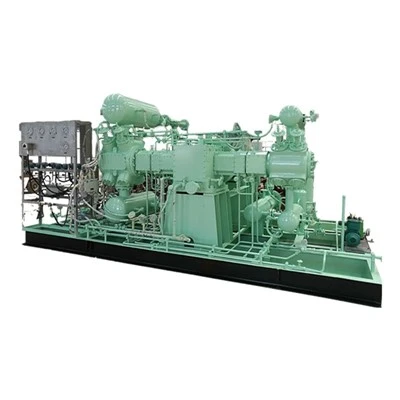
Choosing the right screw gas compressor isn’t just about picking the biggest or cheapest one on the market. It’s about matching the compressor to your gas, your capacity, your pressure, your operating conditions, and your long-term needs. I’ve seen customers make every mistake in the book—over-sizing, under-sizing, buying the wrong type for their gas, skimping on maintenance—and each time, it cost them more than if they’d taken the time to get it right the first time. At the end of the day, the goal is to find a compressor that operates efficiently, keeps your processes running smoothly, and fits your budget. If you’re still not sure which compressor is right for your application, reach out to discuss your requirements.
High Pressure Piston Compressors References
- Gas Compressor Handbook, 4th Edition, McGraw-Hill Education, 2019
- "Screw Compressor Efficiency: Factors Impacting Performance", International Compressor Engineering Conference, 2021
- Occupational Safety and Health Administration (OSHA) Guidelines for Hazardous Location Compressors, 2022
- Food and Drug Administration (FDA) Standards for Compressed Gas Quality, 2020
Shanghai Sollant Energy Saving Technology Co., Ltd.
As one of the most professional screw gas compressor manufacturers and suppliers in China, we’re featured by quality products and good service. Please rest assured to buy bulk durable screw gas compressor from our factory. Welcome to view our website for more information.
Address: No.215, Songri Center, Beihongqiao, Jiading District, Shanghai, China.
E-mail: info3@sollant.com
WebSite: https://www.sollant-gas.com/
